Balancing Sustainability and Cost Efficiency in Retail Displays A Market Growth Study of Cardboard Display and Meiyastand Advantages
Cardboar Displays unite sustainability and cost control Learn growth drivers shopper impact and how Meiyastand delivers certified fast and scalable Cardboard Display programs
Back to blogs
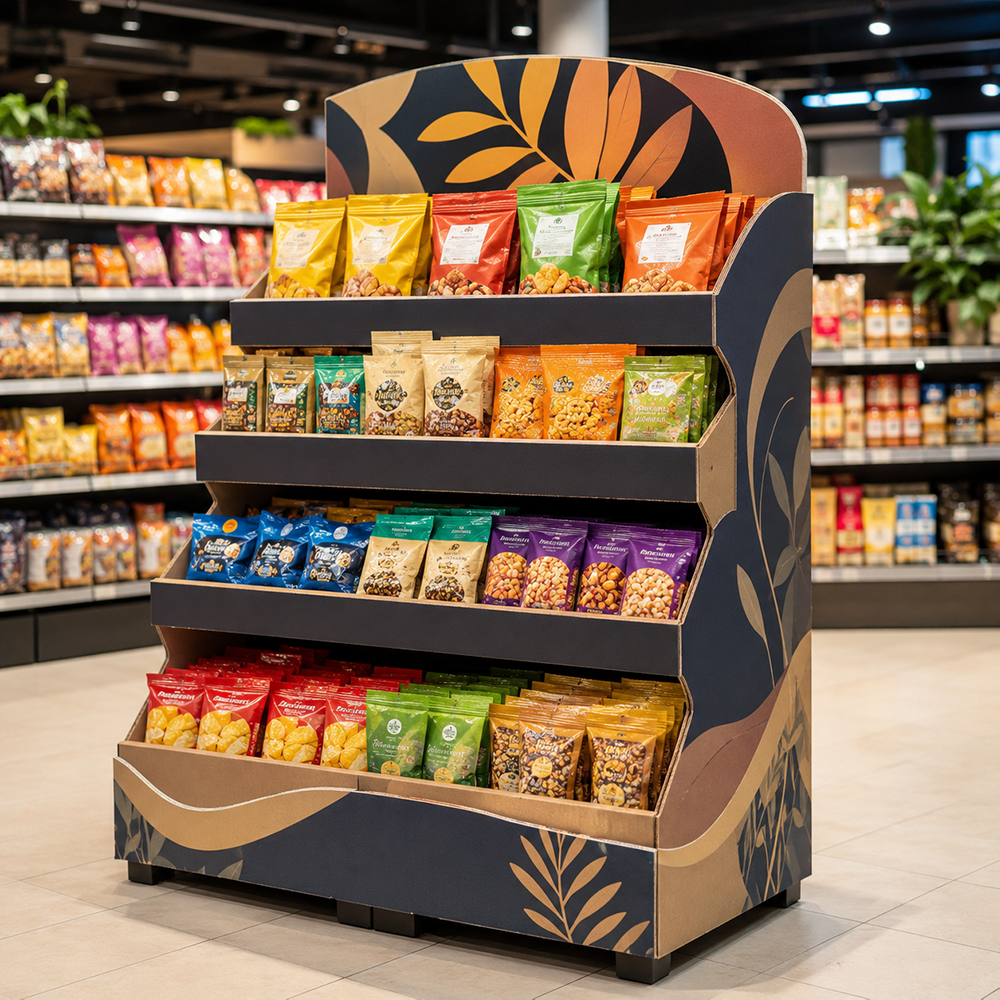
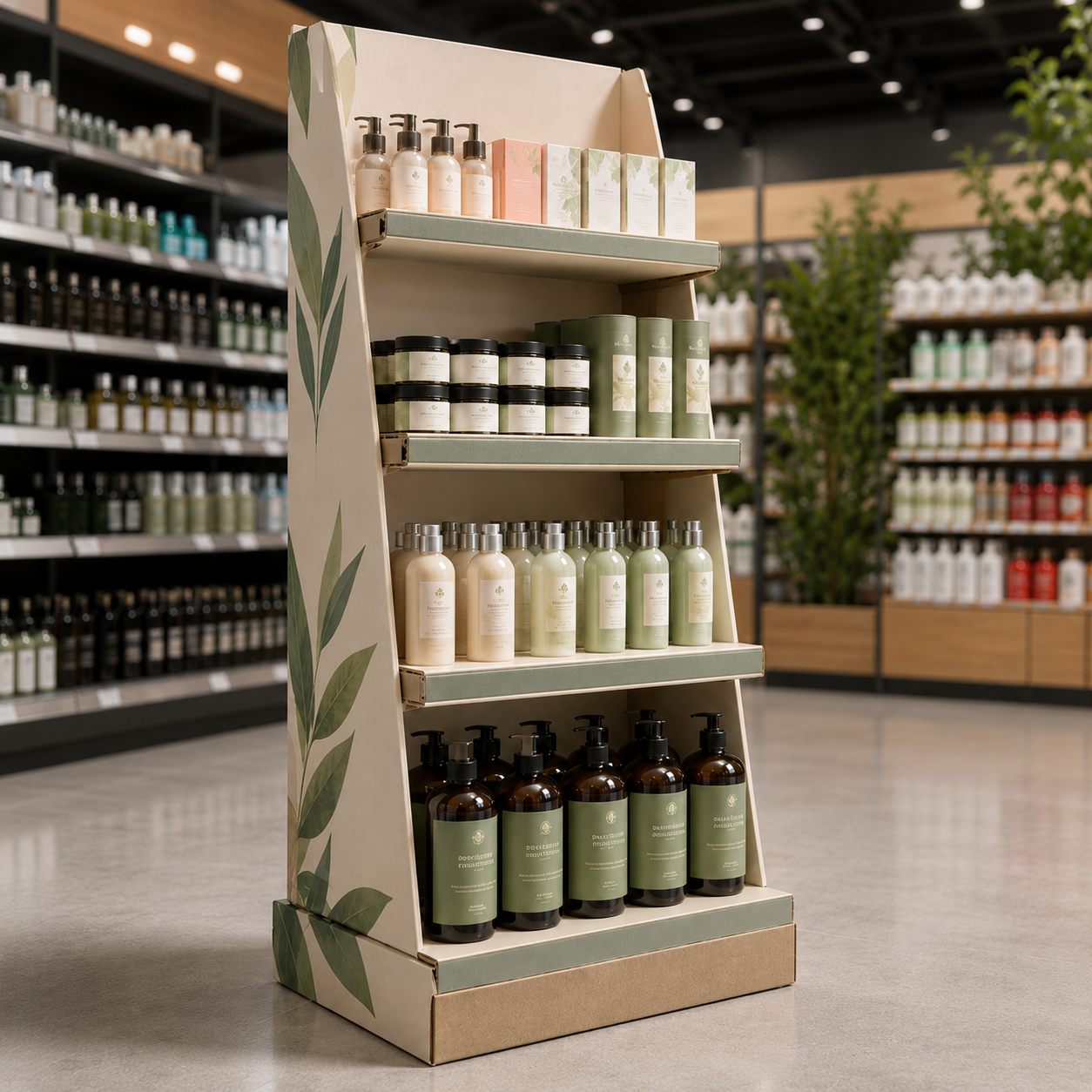
Cardboard displays continue to experience steady growth, primarily driven by their ability to reduce total landed costs (including production, transportation, warehousing, and in-store execution) enable rapid deployment across large-scale store networks, and align with consumer expectations for recyclable materials. Market tracking data indicates steady expansion in both point-of-purchase (POP) display solutions and the corrugated and paper packaging sectors that underpin cardboard display projects.
Key Drivers of Current Demand Growth
1. Consumers Prioritize Recyclability
In a major 2025 study, recyclability was identified as the most noticeable and important sustainability attribute for consumers in packaging and in-store environments. This positions cardboard displays as a credible signal of sustainability progress that does not require adopting complex new material systems, making them more easily understood and accepted by the market.
2. Mature Paper Recycling Infrastructure Data from the U.S.
EPA and industry reports shows high paper recycling rates in the United States, particularly for corrugated cartons. While there are variations in statistical methodologies across different paper sources, the conclusion for retail teams is clear: among common packaging materials, the recycling infrastructure supporting cardboard displays leads the way, facilitating the practical implementation of closed-loop recyclability.
In-Store Conversion Impact: Why Displays Still Matter
Displays remain important because many customer purchase decisions are still made in-store. POPAI’s Mass Merchant Shopper Engagement study widely cited in the industry notes that in-store decisions account for a significant proportion of purchases, and display formats that interrupt customer flow have a notable impact on buying choices. While data varies across channels and categories, the core principle holds true: at the critical moment of consumer choice, sufficiently eye-catching displays help products stand out.
Quantifiable Cost Efficiency for Finance Teams
1. Space Utilization and Shipping Cost Reduction
Cardboard displays with flat-pack packaging reduce dimensional weight billing pressure and enable more efficient use of vehicle and container space. Even minor reductions in package size can lower billed weight, thereby cutting overall shipping costs.
2. Rapid In-Store Setup
PDQ and Retail Ready displays typically offer ready-to-use upon arrival functionality or can be assembled in minutes. This helps reduce in-store labor costs and shortens the time from delivery to first sale.
3. Superior Printing Performance with Lightweight Design
Micro-flute cardboards such as E-flute and F-flute feature smoother surfaces, supporting high-quality CMYK graphic reproduction while maintaining structural lightness and compact packaging. This makes them better suited for transportation and rapid market rollout.
Most Common and High-Impact Application Scenarios for Cardboard Displays
Cardboard displays tend to excel in the following scenarios: seasonal launches, new product trials, impulse-purchase categories (such as those near checkout areas), and secondary placements adjacent to target categories. Teams can test different messages and visuals quickly because structures and artwork can be updated faster, without the need for high-cost permanent display fixtures. For retailers, post-campaign disposal is also simpler, as displays can usually enter the paper recycling system directly.
Market Size Overview
Analysts project that research firms generally estimate the global POP display market will reach around several billion US dollars by 2025, with single-digit annual growth expected through 2030. The corrugated and paper packaging market, which supplies cardboard displays, is also showing strong growth momentum, a trend that will continue into 2030 and beyond. This supports stability in production capacity and pricing. Specific figures vary by data source and statistical scope, but the overall trend remains consistent.
Core Advantages for Buyers from Meiya Display and Meiya Printing
Compliance Credentials and Traceable Materials
Meiya Display holds certifications including FSC Chain of Custody, ISO 9001 Quality Management System, and social responsibility credentials. We explicitly use FSC-certified corrugated board and water-based inks for production. This advantage simplifies the vendor onboarding process for buyers in terms of sustainability and quality compliance.
Flexible MOQs and Predictable Lead Times
Public FAQs clearly state the minimum order quantities: approximately 100 units for countertop displays and 50 units for floor-standing displays. Standard lead times are measured in weeks. For large-scale rollout needs, we provide dedicated support for coordinated logistics and chain deliveries.
Comprehensive Quality Control System
Meiya Display has established full-range testing standards covering color accuracy, load-bearing capacity, burst strength, and drop resistance. Paired with end-to-end monitoring processes, this system effectively reduces defect rates and ensures on-time delivery.
Full Product Range Coverage
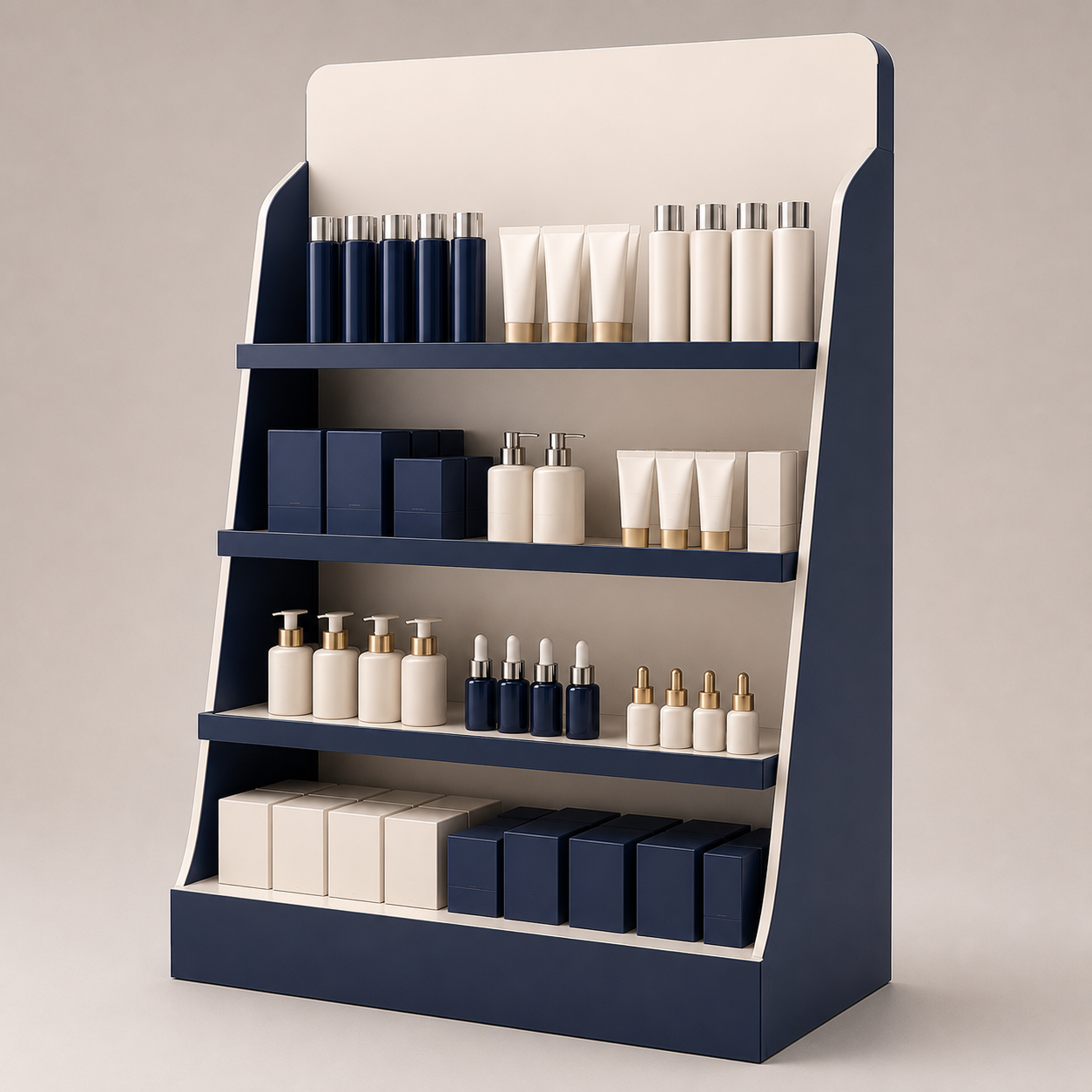
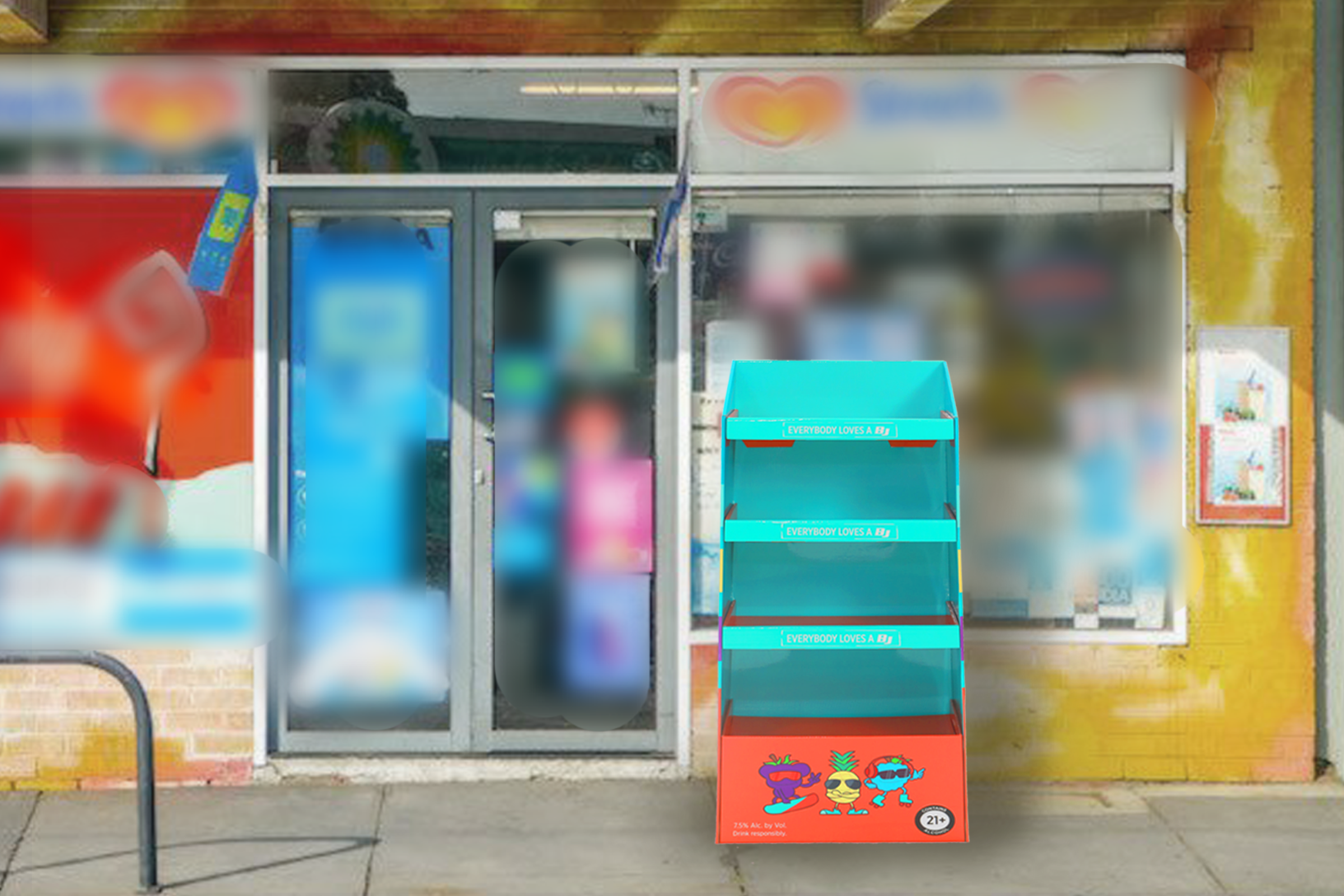
Our product category pages include a complete lineup of solutions: floor-standing displays, hook displays, countertop displays, leaflet holders, dump bins, and pallet-style displays. Buyers can consolidate with a single partner to meet most cardboard display procurement needs and achieve supply standardization.
Operational Efficiency Enhancement
Tool-free snap-fit assembly design and flat-pack shipping significantly reduce warehouse processing time and lower shipping costs. The optional preloading service, a common optimization in the display industry, further saves in-store labor costs.
Adaptable Simple ROI Calculation Model
Assume 1 cardboard floor-standing display drives 6 incremental units sold per day with a $3 margin per unit for 6 weeks.
Incremental margin comes to $756, calculated as 6 units × $3 margin × 42 days.
Cost per unit program totals $260, including $190 for printing and forming, $45 for freight, and $25 for store setup.
Net contribution per unit is $496, derived from $756 in incremental margin minus $260 in program costs.
Scaled to 100 stores, the net contribution over a 6-week campaign is approximately $49,600.
Adjust the above parameters based on your category, price point, and store traffic.
Implementation Checklist
- Define key performance indicators (KPIs): sell-through rate or unit lift, and set a clear display removal date.
- Select the structure based on load-bearing and replenishment needs: E-flute or F-flute for high-end packs with intricate printing, and heavier flutes for displays with large load capacities.
- Design appropriately sized master cartons to control dimensional weight for inbound shipments.
- Use PDQ display boxes or preloading services when store labor is tight or efficiency is a priority.
- Print small recyclability labels to reinforce the communication of sustainability values that shoppers expect.
Conclusion
Cardboard displays serve as a practical bridge between sustainability commitments and tangible economic benefits: they can be shipped flat, assembled quickly, deliver excellent CMYK full-color printing results, and integrate into existing recycling systems. The growth momentum of the POP display and corrugated packaging markets supports stability in supply and pricing. With comprehensive certifications, in-depth quality control, and a diverse product range, Meiya Display and Meiya Printing are well-equipped to deliver cardboard display programs that can be scaled up with confidence.
Cardboard Displays that win at the shelf, with recyclable corrugated and premium CMYK graphics. Meiyastand makes testing, launching, and scaling simple for retail teams.
Useful Links:
。AF&PA. (2023, August 8). U.S. paper recycling rates continue to hold strong.https://www.afandpa.org/news/2023/us-paper-and-cardboard-recycling-rates-continue-hold-strong-2022?utm_source=chatgpt.com
。Creative Displays Now. (2024, April 23). What is a PDQ display.https://www.creativedisplaysnow.com/pdq-displays-lightning-quick-displays/?utm_source=chatgpt.com
。EPA. (2024, November 8). Containers and packaging product specific data.https://www.epa.gov/facts-and-figures-about-materials-waste-and-recycling/paper-and-paperboard-material-specific-data?utm_source=chatgpt.com
。EPA. (2024, November 8). Paper and paperboard material specific data. https://www.epa.gov/facts-and-figures-about-materials-waste-and-recycling/paper-and-paperboard-material-specific-data?utm_source=chatgpt.com
。Grand View Research. (2024). Corrugated boxes market size report.https://www.grandviewresearch.com/industry-analysis/corrugated-boxes-market-report?utm_source=chatgpt.com
。Grand View Research. (2024). Point of purchase packaging market size report.https://www.grandviewresearch.com/industry-analysis/point-of-purchase-packaging-market?utm_source=chatgpt.com
。McKinsey & Company. (2025, June 4). Do US consumers care about sustainable packaging in 2025.https://www.mckinsey.com/industries/packaging-and-paper/our-insights/do-us-consumers-care-about-sustainable-packaging-in-2025?utm_source=chatgpt.com
。POPAI. (2014, February 12). Mass Merchant Shopper Engagement Study results.https://www.retailcustomerexperience.com/news/popai-releases-2014-mass-merchant-study-results/?utm_source=chatgpt.com
。ProShip. (2025, February 4). Eco friendly changes to parcel packing that save money.https://proshipinc.com/blog/expert-series-eco-friendly-changes-to-your-parcel-packing-that-save-money/?utm_source=chatgpt.com
Latest Posts
All Posts