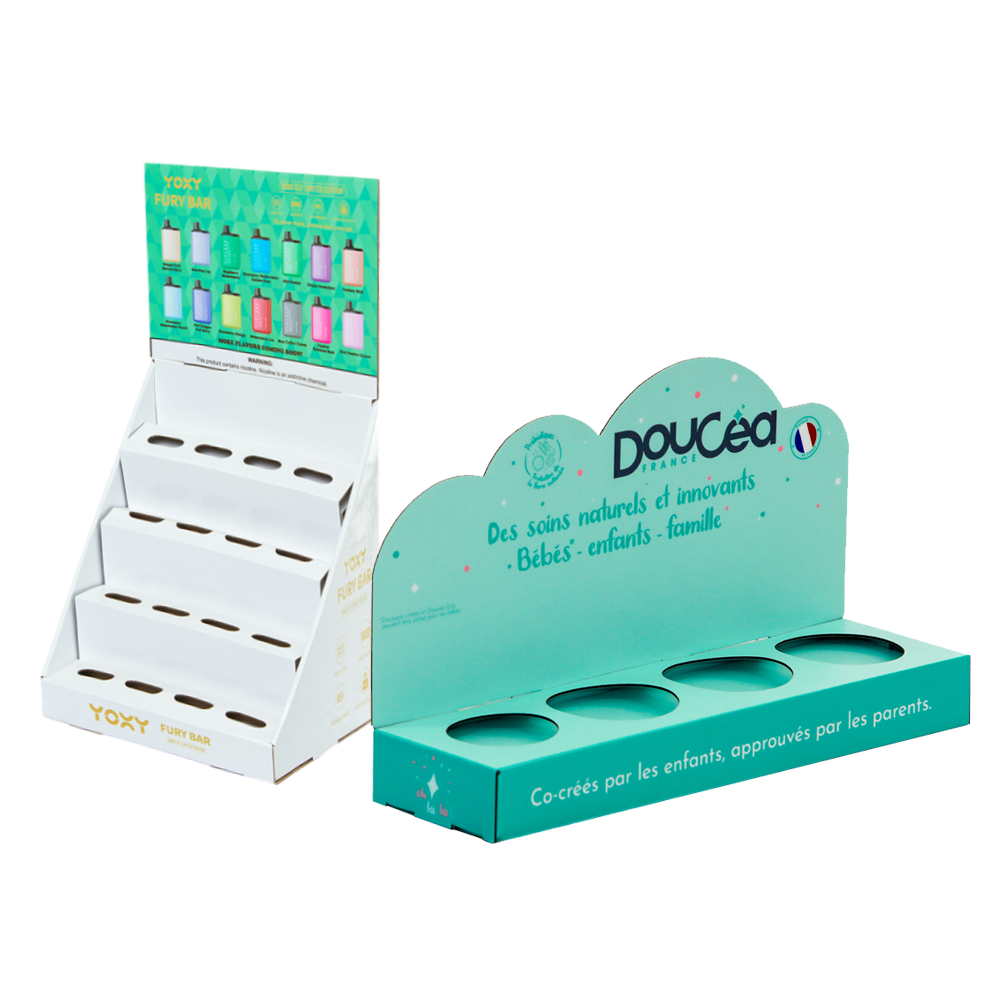
Structural Design of Corrugated POP Displays: Premium Appearance, Solid Strength
Premium corrugated POP displays stay strong with smart board and flute choices, clear load paths, targeted reinforcements, and early prototypes to meet retailer rules.
Back to blogs
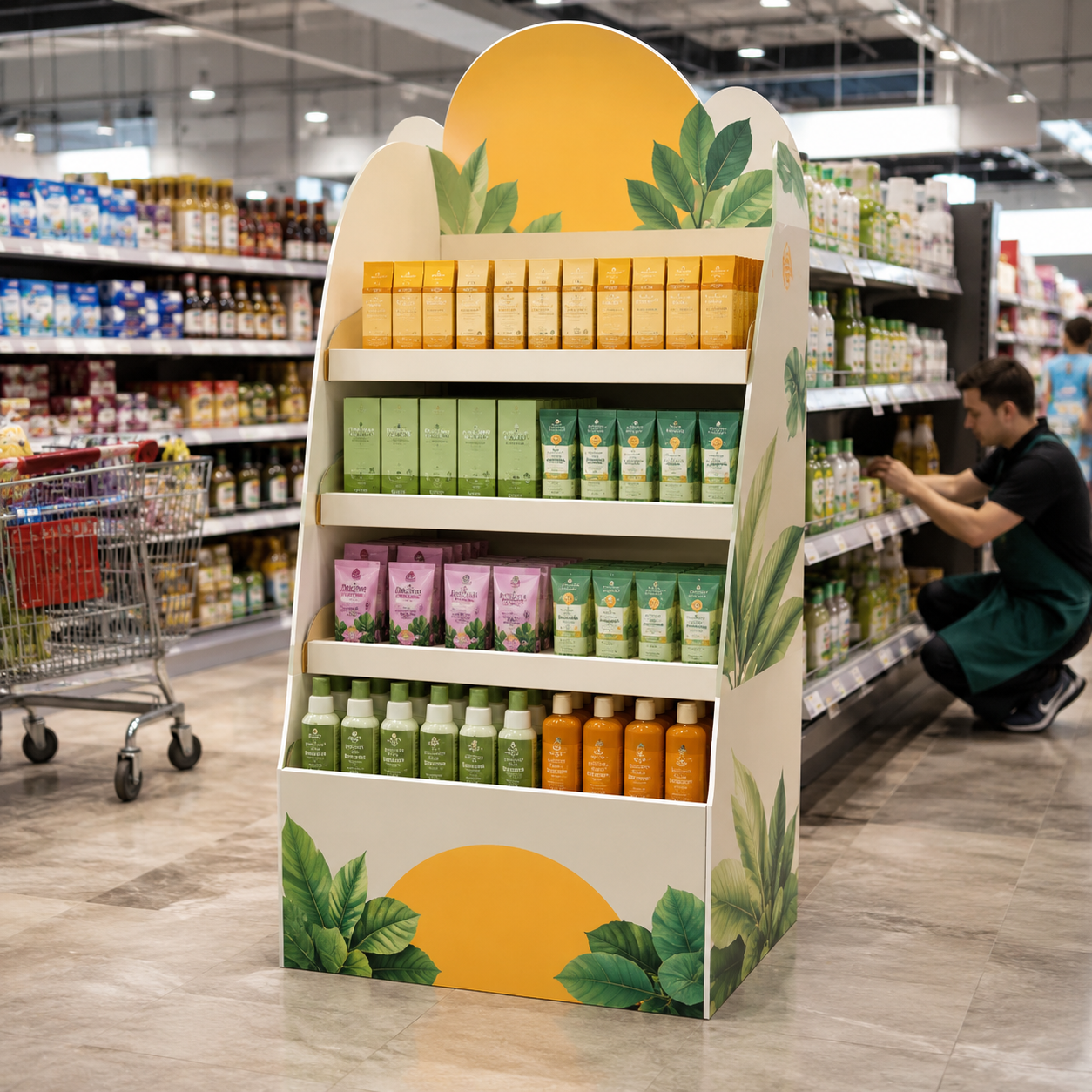
In the retail chain industry, POP display stands perform dual missions: they need to instantly capture customer attention while maintaining stability during shipping, handling, restocking, and frequent contact. The key to whether a display stand can endure weeks of use or sags or wobbles early usually lies in its structural design. This means selecting appropriate cardboard structures and corrugated profiles based on load-bearing requirements, building clear loading paths, reinforcing high-stress points, and validating designs through physical samples before mass production.
Choose the right cardboard structure, not just thickness
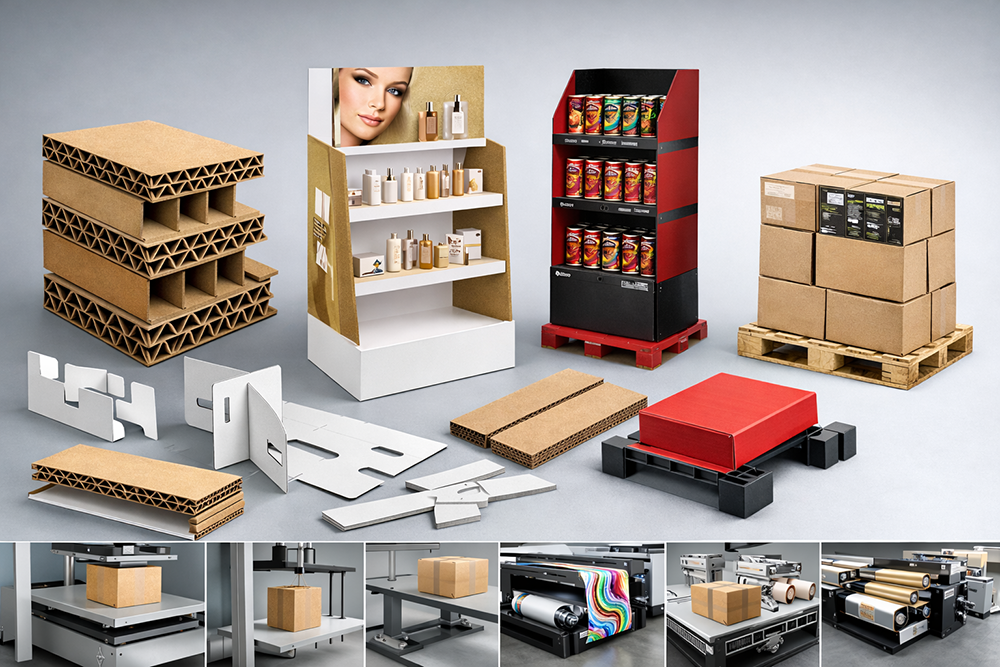
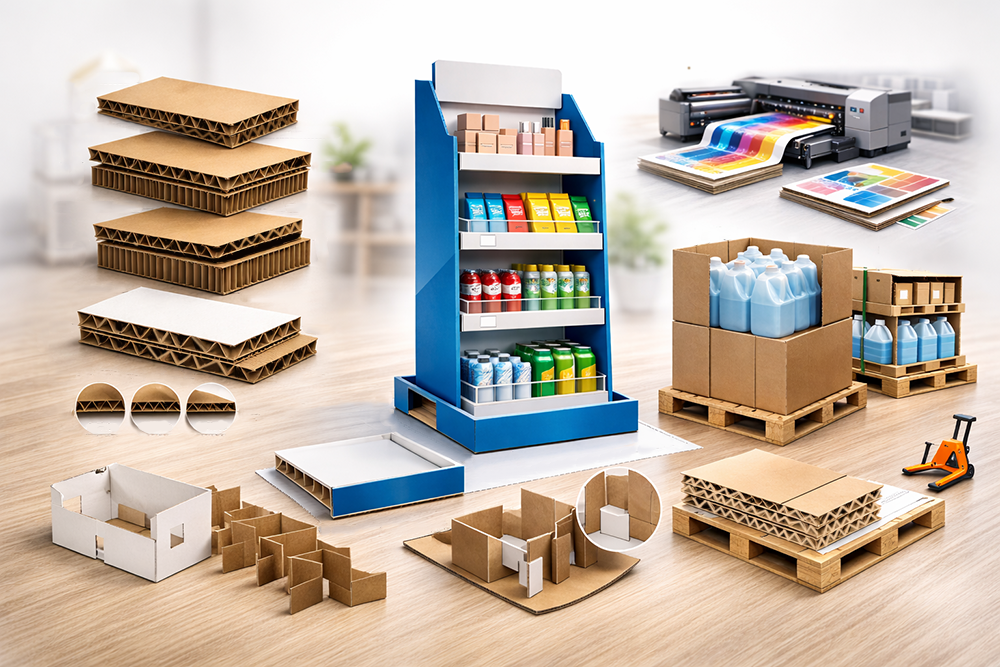
Most POP displays use corrugated cardboard, whose performance depends on the board grade and the layers between the flute and liner.
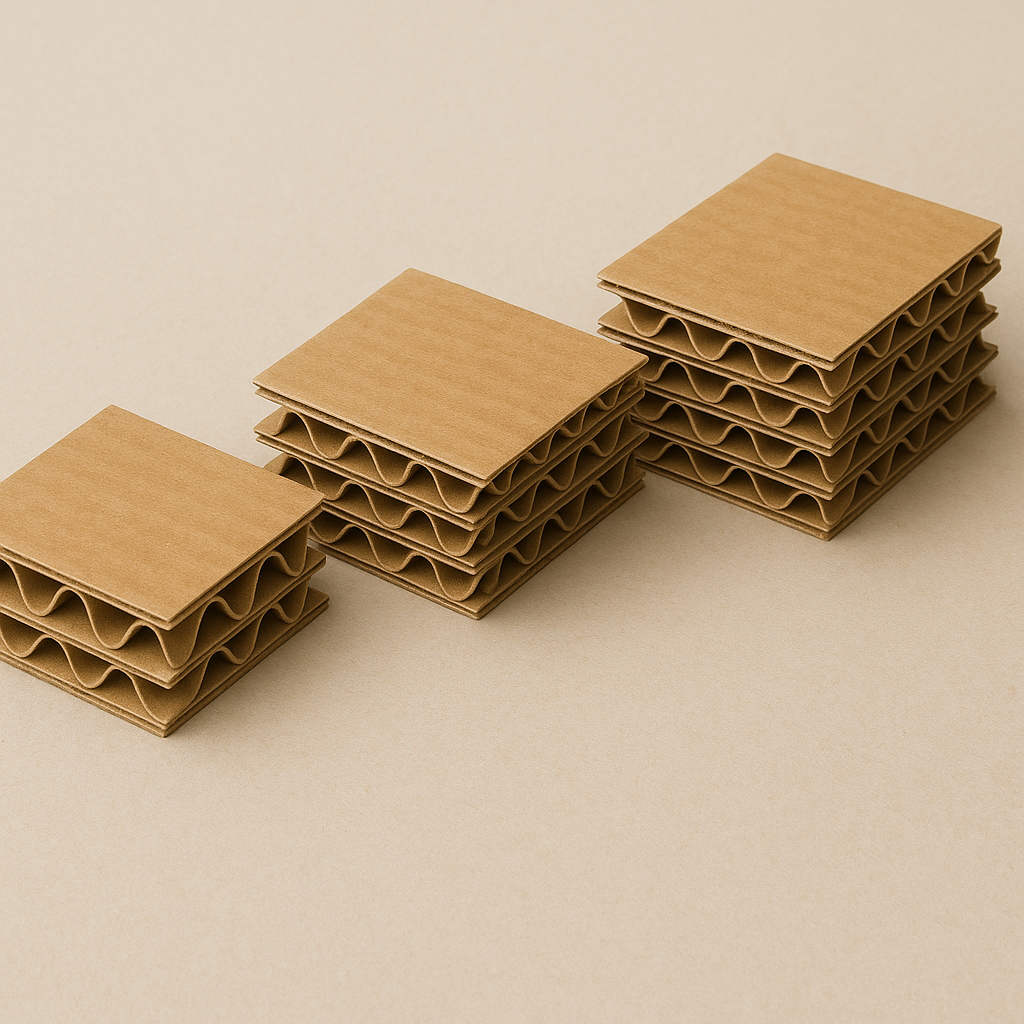
- Single-wall corrugated is light and cost-effective, suitable for counter displays, pallets, and PDQ display shipping boxes (typically pre-packed for counter display), with lighter products.
- Double-wall corrugated enhances rigidity, supporting heavy product combinations, tall displays, and long-term promotions. It maintains shelf stability and improves base pressure resistance.
- Triple-wall corrugated is usually used for extremely heavy goods, high stacking requirements, or harsh shipping environments. While most retail promotions do not require this, it is worth considering when performance demands extra buffer.
A practical rule is to select the lightest structure that meets handling, stacking, safety, and retailer requirements.
Flute selection balances strength, appearance, and shelf efficiency
Corrugation profiles influence rigidity, cushioning, compression margin, and printing flatness.
- A-flute provides strong cushioning and good stacking strength, but features a more textured surface.
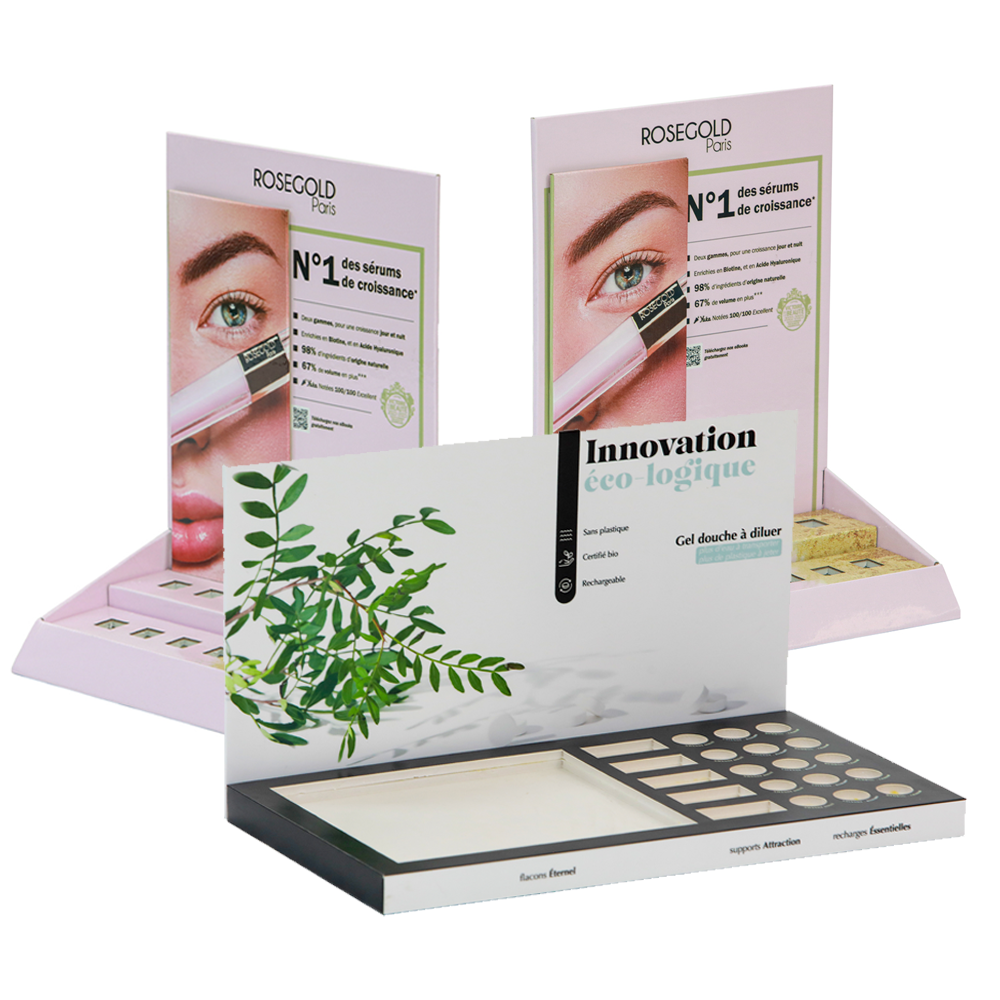
- E-flute and F-flute provide smoother printing surfaces and superior appearance (commonly used for cosmetics and small electronics). Due to their thinner thickness, long shelf spans and heavy loads may require sturdier board grades or smarter reinforcement.
- C-flute and B-flute are retail mainstays. C-flute is a common choice for durability and distribution margin. B-flute improves space utilization and shelf efficiency through thinner thickness, while maintaining strong compression resistance.
- Compound flutes (e.g., BC or EB) are often used for floor displays requiring both rigidity and clean surfaces.
Linerboard is also critical: high-strength linerboard boosts edge durability and crush resistance, while bright white linerboard delivers cleaner, more consistent color. Confirm corrugation direction and linerboard texture orientation in advance, since these factors will significantly affect span stiffness, creasing performance, and long-term shelf deformation.
Reinforcement lies in load paths, not simply adding more boards
Most in-store failures are predictable: shelf deformation, overall looseness, or collapsed bottom edges. Premium design directs weight flow to load-bearing zones and strengthens high-stress points.
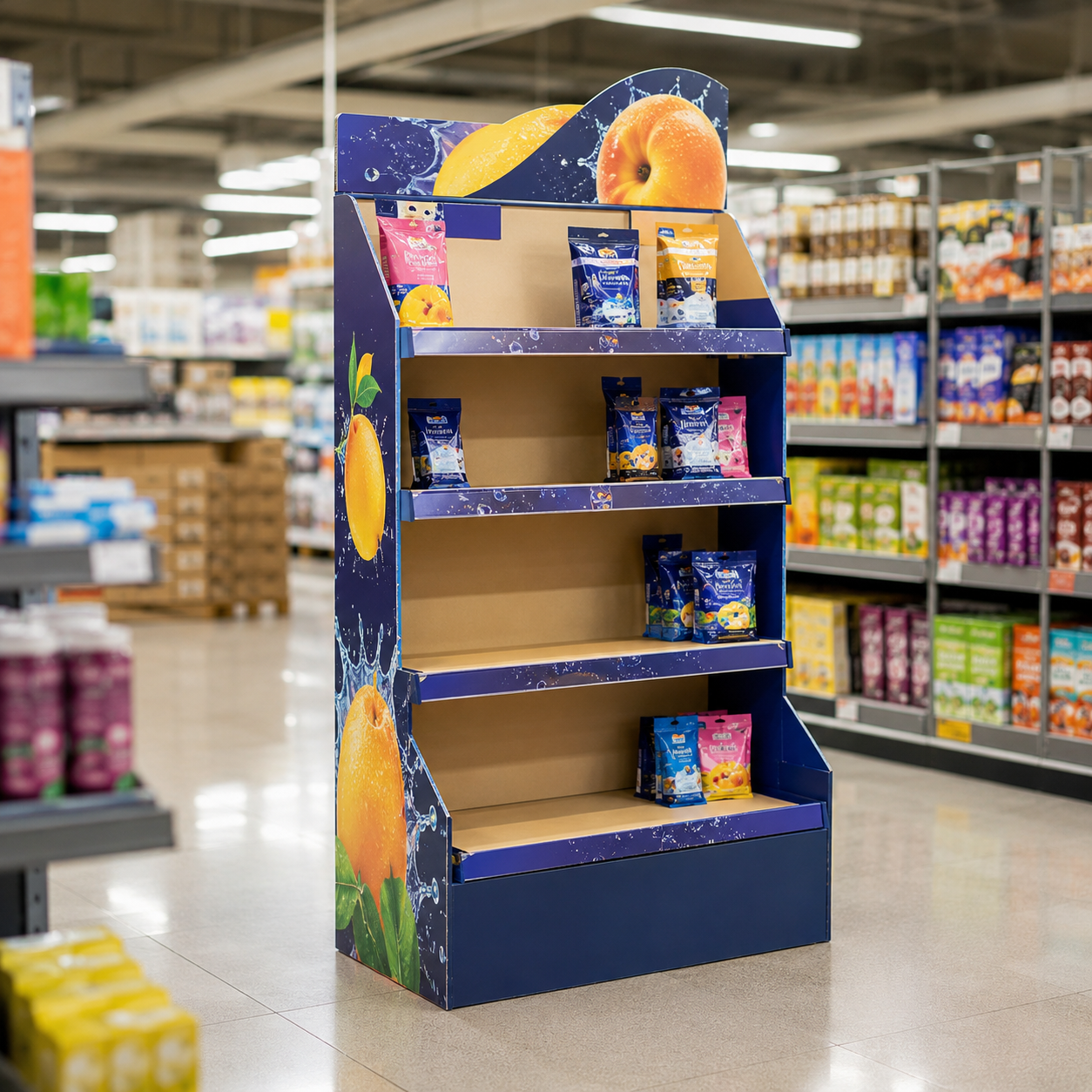
- Shelving reinforcement solutions: Double-layer shelves, curved beams, or die-cut supports effectively reduce sagging during long-term use.
- Stabilized bases: Widened base areas and reinforced pallet structures spread loads to lower tipping risks.
- Geometry interlocks: Utilize robust interlocking structures, slots, and glued flaps to maintain tightness despite repeated shopper touch and restocking.
- Counterweight placement: Place heavy items on lower shelves to enhance balance and reduce wobbling.
- Edge protection: Reinforce bottom edges and corner areas that are frequently targeted by dragging, cart impacts, or pallet rubbing, where early surface damage often escalates into structural failure.
Prototype before mass production
For serialized projects, sampling serves as basic risk control. Typical processes include:
- White samples: Confirm patterns, stability, assembly time, and packaging effects.
- Printed samples: Evaluate layout alignment, color rendering, surface finish effects, and design performance on actual printing substrates.
- Performance testing: Conduct compression and stacking tests for ECT (Edge Crush Test) and BCT (Box Compression Test) based on relevant metrics. Supplement with drop tests, vibration simulations, and other operations simulating practical distribution scenarios.
Minor adjustments to corrugated structure, shelf span, lock geometry, or crease depth can significantly affect performance. It is advisable to validate early, especially when projects require continuous operation over weeks, transit through multiple distribution centers, or involve frequent shopper contact.
Designing backwards from retailer rules and store execution
Retailer restrictions are often non-negotiable: pallet footprint, maximum shipping and display height, stacking requirements (including potential double-stacking), and practical store needs like quick assembly and easy restocking.
Plan for actual conditions, not ideal conditions. Consider humidity and storage conditions, as moisture absorption will reduce compression margin and accelerate shelf sagging. Since supplier manuals and regional rules may change, ensure you have the latest documents before finalizing templates, packaging, and shipping.
Printing and finishing: ensure color consistency after process selection
- Flexographic printing excels in large solid-color coverage and repeat accuracy, but requires balancing plate costs against setup time.
- Digital inkjet printing suits short runs and version changes, though it incurs higher unit costs for mass production and demands stricter process control for brand color matching.
- Offset lamination (applying offset-printed paper to corrugated board) is commonly used for premium, high-detail graphics printing, but it adds steps and costs.
No matter what process is used, print proofs on the actual printing substrate whenever possible to maintain brand color consistency. Avoid placing critical logos, QR codes, or small text on fold lines or crease lines.
Die-cutting lines and prepress preparation: avoiding unexpected issues
Ensure sufficient bleed and safety margins. Avoid placing critical text along fold and crease lines. Confirm that gluing areas and locking features align with the design artwork. After each die-line modification, conduct a final assembly check, as minor adjustments may affect fit, squareness, and long-term stability.
Repeatable workflow
Define objectives and constraints, select materials and structures, prototype and validate, finalize die lines and color specs, produce after quality inspection, then pack and ship for retail.
Source and validation notes
This guide is based on widely used corrugated cardboard engineering practices and common retail POP production processes. For specific project requirements, refer to the latest retailer supplier manuals and validate final packaging effects with physical samples before mass production. Industry-standard reference frameworks include testing standards and guidelines from organizations such as TAPPI, ASTM, and ISTA, as well as regional standards from local corrugated associations.
Useful Links:
- How to Design Eye-catching Corrugated Cardboard POP Displays
https://meiyastand.com/post/how-to-design-eye-catching-corrugated-cardboard-pop-displays - Understanding PDQ Displays: What They Mean and Why Retailers Use Them
https://meiyastand.com/post/understanding-pdq-displays-what-they-mean-and-why-retailers-use-them - Floor, Counter, or Sidekick POP Displays: Which One Is Best for Your Product?
https://meiyastand.com/post/floor-counter-or-sidekick-pop-displays-which-one-is-best-for-your-product - Tool-Free Cardboard Display Stands: Streamlining Retail POP Display Installation
https://meiyastand.com/post/tool-free-cardboard-display-stands-streamlining-retail-pop-display-installation - How to Choose the Right Custom Cardboard Display Stand for Your Brand
https://meiyastand.com/post/how-to-choose-the-right-custom-cardboard-display-stand-for-your-brand - Pricing Guide: Choosing the Right Cardboard Display
https://meiyastand.com/info/pricing-guide - Quality Control
https://meiyastand.com/info/quality-control - Compliance & Certifications
https://meiyastand.com/compliance-certifications
Latest Posts
All Posts