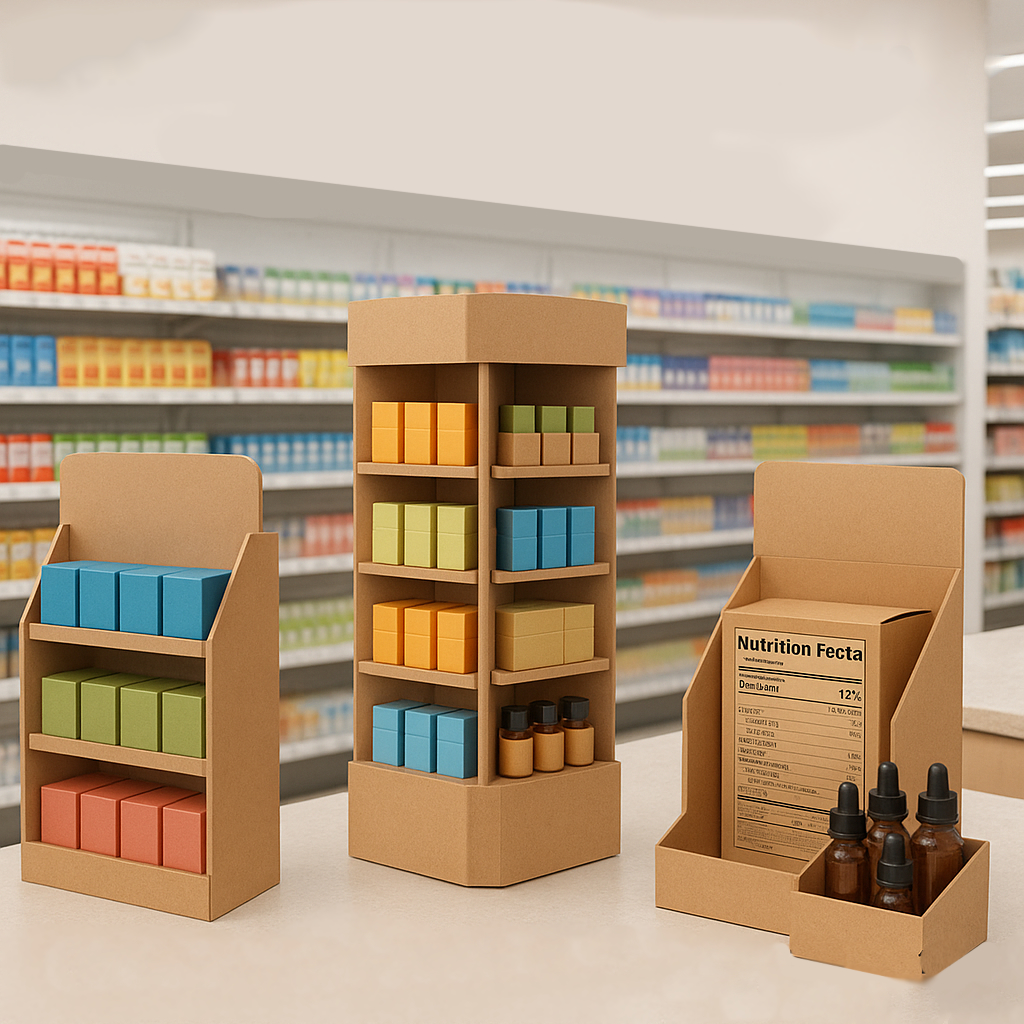
Understanding Packaging Types and Their Role in Visual Merchandising
The post explains primary, secondary and tertiary packaging and shows how folding cartons and paper displays support visual merchandising in store.
Back to blogs
Packaging not only plays a key role in protecting products but also determines their presentation and visual impact in retail settings. In visual merchandising, every layer of packaging influences how products are displayed, arranged, and recognized. Meiya Display specializes in offering eco-friendly paper display solutions. We integrate packaging closely with displays, transforming ordinary cartons into effective retail merchandising tools such as rotating displays, endcap displays, and countertop display boxes designed for one-ounce bottled products.
I. Primary Packaging
Primary packaging refers to the material that directly encloses products. It serves to protect the contents and convey key information to consumers, such as labels, ingredients, and brand logos. This is typically the first packaging consumers come into contact with. Examples include shampoo bottles, folding cartons for cosmetics, and paperboard boxes for individual snack items.
In Meiya Display’s design philosophy, primary packaging often forms the foundation for integrated displays. A well-thought-out design allows primary packaging to seamlessly connect with secondary and tertiary packaging, creating a cohesive and consistent visual display.
II. Secondary Packaging
Secondary packaging is used to group multiple primary packages together, facilitating handling, transportation, and retail display. It typically takes the form of printed cartons or shrink-wrapped pallets. Typical examples include a set of small glass bottles placed in a sturdy paperboard sleeve, or multiple products assembled into a countertop display box.
Secondary packaging can also serve directly as part of retail displays. When featuring high-quality printing and an open-top structure, it functions as a ready-to-use display container, ideal for promotions or small product bundles. Meiya Display helps brands transform these cartons into exquisite mini-displays, boosting product visibility and capturing customer attention.
III. Tertiary Packaging
Tertiary packaging is designed for bulk transportation and protection, such as pallets, outer corrugated cartons, or large wooden crates. This layer ensures the safe transport of products from the production line to retail distribution centers. While consumers rarely see it directly, efficient tertiary packaging keeps displays and folding cartons intact during transit, laying the groundwork for successful in-store presentations.
IV. Paper Packaging and Folding Cartons
Paper packaging, especially folding cartons, is one of the core elements of retail displays and brand expression. Folding cartons are produced through paperboard printing, die-cutting, folding, and gluing processes, combining practicality with aesthetic appeal. Being lightweight, recyclable, and cost-effective, they are widely used in the food, beauty, pharmaceutical, and consumer goods industries.
At Meiya Display, folding cartons are more than just product enclosures, they form an integral part of visual merchandising structures. Whether used in supermarket endcap displays or as replaceable trays in rotating displays, these cartons balance structural strength with visual impact. Leveraging advanced CMYK and Pantone color printing technologies, along with finishing processes like glossy or matte lamination, each carton enhances brand identity while retaining its eco-friendly properties.
V. Display Boxes and Countertop Displays
Display boxes are paper containers that integrate packaging and display functions. They typically feature an open design, capable of holding multiple products while allowing easy access for customers. Common types include floor-standing displays, countertop display boxes, and endcap displays installed at the ends of retail shelves.
For instance, a countertop display box designed for one-ounce bottled products is a practical, space-saving merchandising solution. Often placed near checkout counters, it is ideal for showcasing small items such as essential oils, small bottles of fragrance, or travel-sized cosmetics, effectively boosting impulse purchases.
To achieve rotating display effects, Meiya Display also offers paper rotating displays that combine structural stability with dynamic appeal to capture consumer attention. These displays are particularly suitable for small-packaged goods or seasonal promotional products, enabling 360-degree product visibility.
VI. Applications in Retail and Supply Chains
Paper packaging and displays offer advantages at every link in the supply chain. They can be shipped flat to save space and costs, and quickly assembled in stores. Retailers can arrange displays flexibly, such as endcap displays for quick restocking or rotating displays with replaceable graphics to match seasonal themes.
Sustainability remains a core priority. Most of Meiya Display’s folding cartons and displays are made from FSC-certified or recycled paperboard, aligning with eco-friendly brand positioning. Their flexibility allows brand teams and visual merchandisers to create unified display systems tailored to different products and promotional campaigns. These solutions fit seamlessly whether for large supermarket endcaps or countertop displays used for samples.
VII. Conclusion
From primary packaging to folding cartons and display boxes, every layer shapes a brand’s retail presence. Centering on the integration of structural design and visual merchandising, Meiya Display provides innovative paper display solutions for brands that combine protection, visibility, and sustainability. Whether it’s rotating displays for multi-category products, endcap displays for promotional activities, or countertop display boxes for small bottled items, paper packaging has become a key visual element influencing purchasing decisions in modern retail.
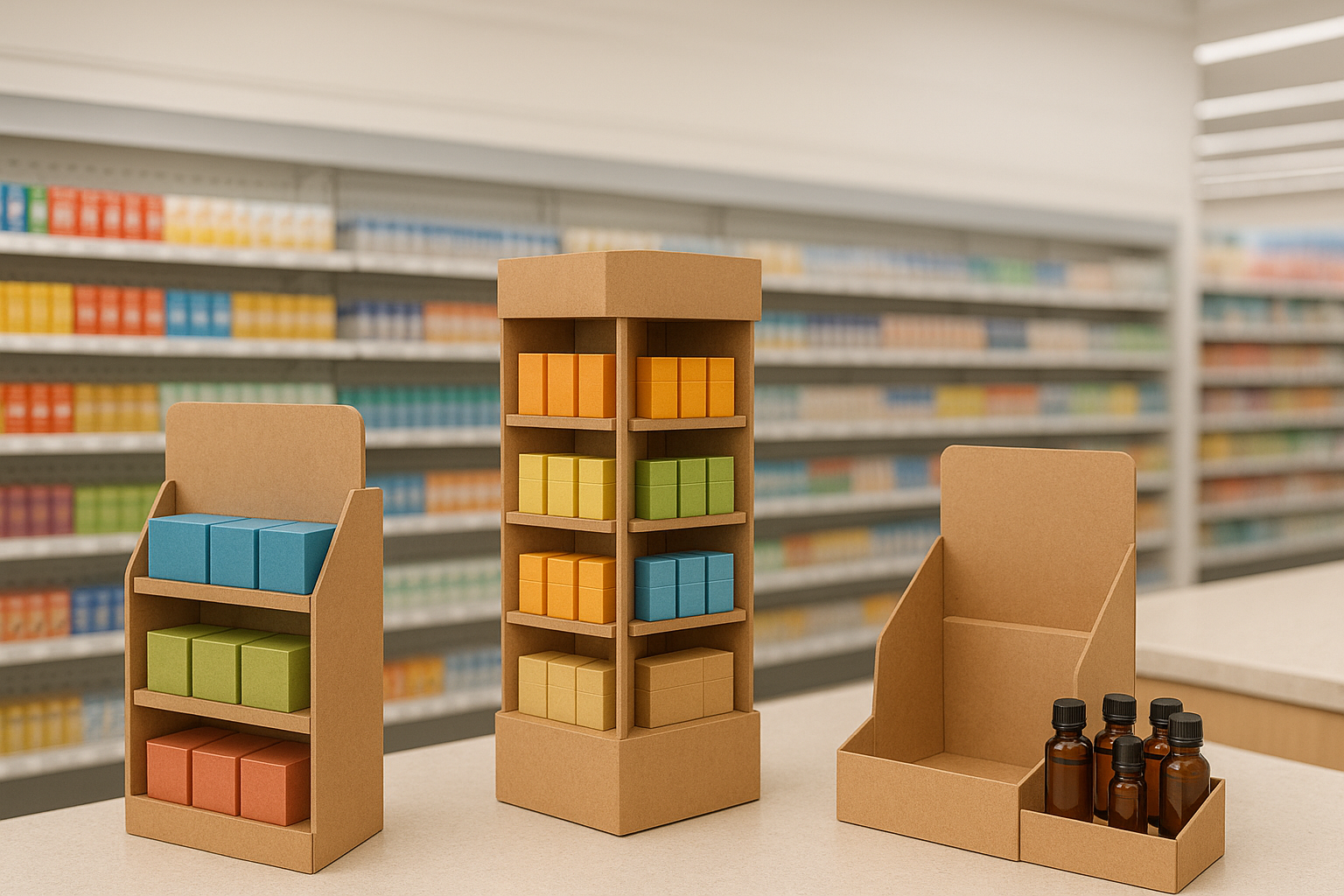
Primary packs flow into secondary cartons and counter PDQ displays creating a tidy retail presentation that supports visual merchandising
Latest Posts
All Posts