Visual Merchandising of Product Display Cases for Skincare: How Meiya Stand Turns Design into Sales for Small Brands
Back to blogs
For small skincare brands competing in the global market, a key strategy to boost in store conversion rates faster is to control how their products appear on shelves at the moment customers make purchasing decisions. Well designed product display boxes act like silent salespeople. They capture attention, highlight product value, and encourage trials, all at a cost often far lower than permanent display fixtures.
Research shows that eye catching displays and endcaps can significantly increase sales, while the global beauty market continues to grow steadily. Meiya Stand offers certified, customizable eco friendly paper display solutions with low minimum order quantities and short lead times, enabling small skincare brands to access professional visual merchandising solutions too.
Market Background: Why Skincare Brands Must Win at the Shelf
Beauty remains a high performing category. McKinsey’s 2025 Outlook projects that the global beauty market will grow by approximately 5% annually through 2030. Many business leaders are focused on driving sales growth and communicating their brand values more clearly to consumers. This means what shoppers see in stores is becoming increasingly critical.
At the point of sale, displays are make or break. Numerous studies show that in store placement and endcap displays at aisle ends can significantly boost purchase frequency and category sales, especially when positioned near primary skincare shelves.
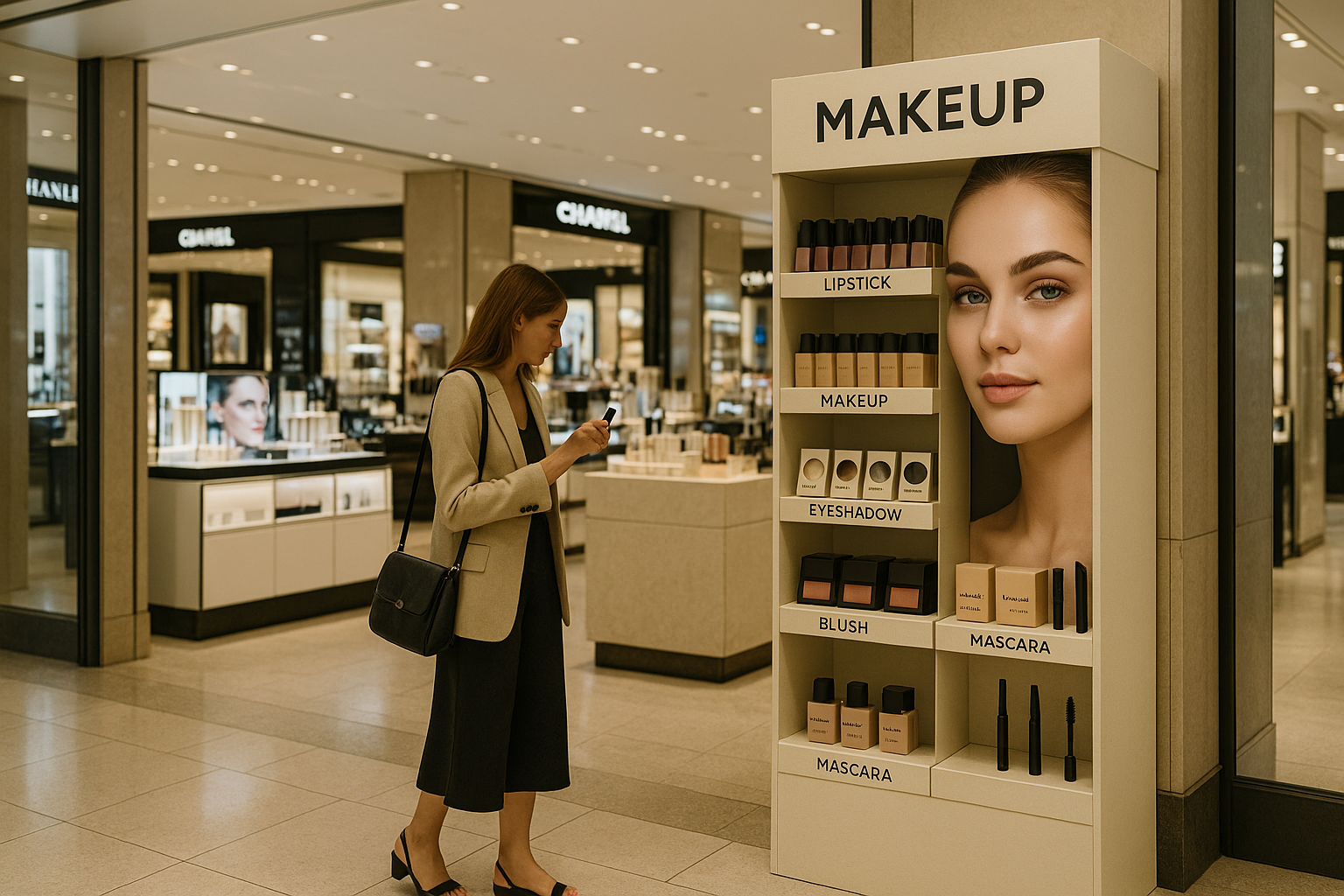
For small skincare brands with limited media budgets, a high impact secondary placement, such as an endcap or countertop display near skincare sections, often delivers results that far outweigh the cost. It helps more customers discover the brand, pick up samples, and add an extra product or two to their skincare routine.
Key Points for Conversion Driven Displays: A Concise Checklist for Skincare
Based on marketing research and real in store testing, high performing skincare displays typically share several common traits.
1. Easy to Understand at a Glance
A short main headline, such as "7 Day Hydration," that directly highlights visible product benefits helps customers grasp the offering quickly. Focus on one or two core selling points plus clean, clear product packaging images. Promotions work best when displays are placed near skincare shelves. Copy should align with the category and customers’ immediate shopping intentions.
2. Premium Look with Practical Structure
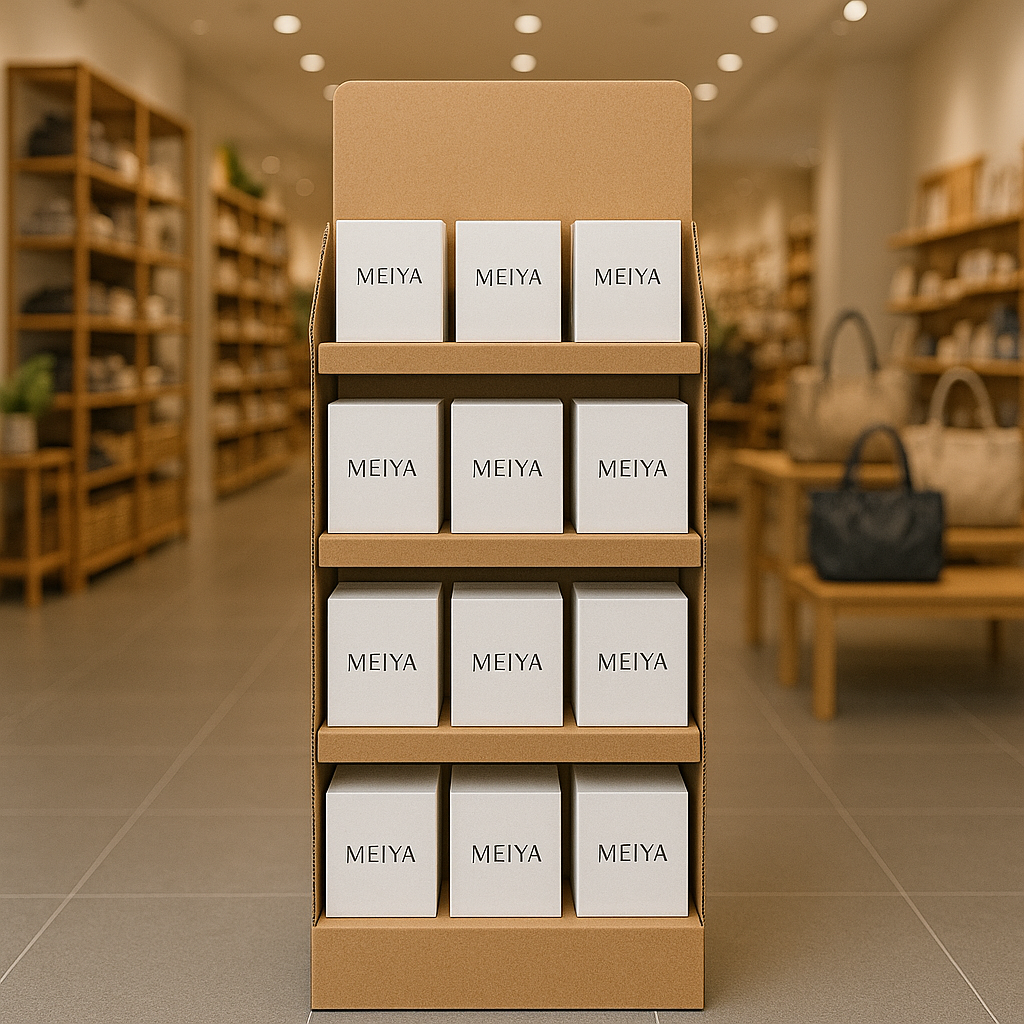
Using thinner corrugated cardboard, such as E flute or F flute, delivers a smoother surface for sharp, high quality printed graphics. Reinforced shelves and support structures securely hold glass bottles and serum vials. Meiya Stand prioritizes meticulous craftsmanship, structural strength, and ease of assembly in design to ensure consistent brand presentation across different stores.
3. Simple Skincare Routine Story to Drive Add on Sales
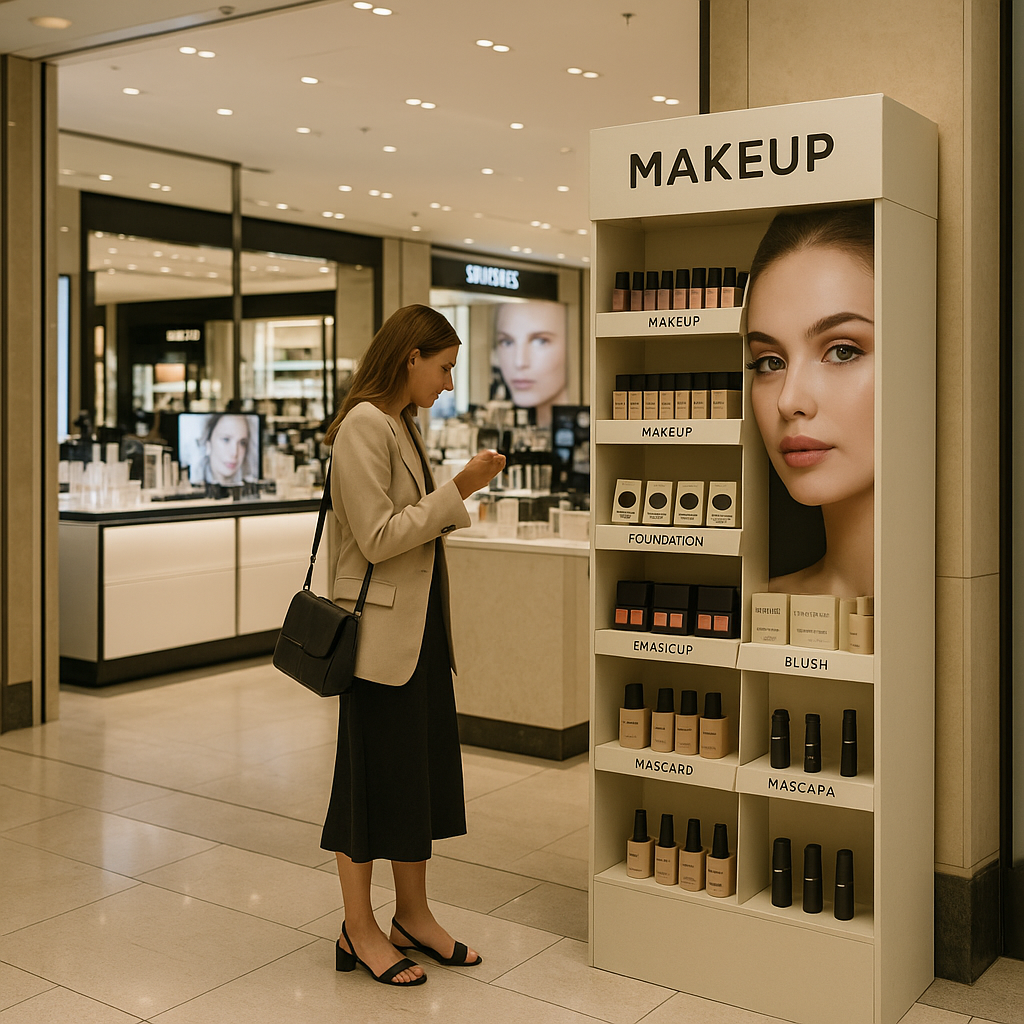
Group related products, such as cleanser, toner, and moisturizer, in divided sections with a simple "Step 1, Step 2, Step 3" guide panel. Research shows displays near primary shelves not only boost overall category sales but also clear shelf storytelling encourages customers to choose a full range of skincare products from the same brand.
4. Place Where Customers Actually Decide
Endcaps and checkout areas are high visibility locations. Studies show products on endcaps receive significantly more visibility than others, while retail research indicates a substantial portion of supermarket sales come from key displays at the end of aisles. Prioritize these spots for new products, limited edition items, and samples.
5. Effective In Store Execution
No matter how good the design, it will fail if not properly assembled in stores. Retail audits reveal many displays are either incorrectly assembled or not set up at all. Brands that monitor display execution and compare it to sales results typically achieve better return on investment (ROI). To support store teams, each display set should include clear assembly instructions with photo examples.
How Meiya Stand Helps Small Skincare Brands Get Started
Certifications for Enhanced Brand Confidence
Meiya Stand holds multiple certifications, including FSC Chain of Custody, ISO 9001, amfori BSCI, and Intertek Workplace Assessment. These credentials are crucial for retailers and consumers who value sustainability and labor compliance.
Customized Aesthetics Without Luxury Grade Costs
Meiya Stand offers fully customized paper product displays, such as countertop PDQ display boxes, floor standing displays, and pallet displays. All are made from recyclable materials and feature brand customized graphics. Flat pack folding packaging reduces shipping volume and enables faster, easier in store assembly.
Low Minimum Order Quantities and Fast Lead Times
For test batches, Meiya provides low minimum order quantities (MOQs). Countertop displays, for instance, start at 100 units. Standard lead times are approximately 2 to 3 weeks, making it ideal for seasonal launches and rapid market testing.
Serving Global Clients
Meiya serves clients in over 20 countries and assists with managing production and logistics across multiple stores. This is particularly beneficial for small brands looking to expand from local markets to international retail channels while maintaining consistent display quality.
Production Capacity Support
Meiya Stand has extensive experience in mass producing floor standing displays, hook displays, and countertop displays, offering one stop service from design to shipment. When test display solutions perform well, this production capacity enables brands to scale up quickly and easily.
Economic Impact: ROI for Small Skincare New Product Launches
Sales Lift
Academic research and real world cases consistently show that high quality displays drive significant sales growth. Specific results vary by category and execution quality, but endcap displays and placements near primary shelves have repeatedly proven to boost purchase frequency. As a starting point, small brands can use a conservative estimate of 10 to 15% sales growth, then refine strategies for better outcomes.
Cost Efficiency
Compared to permanent display fixtures, paper displays are lighter, flat packable, and require tool free assembly. They are also recyclable, helping reduce transportation and labor costs while aligning with consumer expectations for sustainability. Meiya Stand emphasizes eco friendly materials, quick assembly, and rapid distribution capabilities, all factors that lower a brand’s total cost of ownership (TCO).
Risk Mitigation
Low minimum order quantities (MOQs) and 2 to 3 week lead times allow brands to test multiple designs and copy across regions without committing significant upfront budget. Underperforming solutions can be discontinued quickly, while successful ones can leverage the same design files and die cut templates to replicate and scale up rapidly through Meiya’s production process.
Six Week Skincare Display Test Action Plan
Week 1: Develop a Brief and Basic Layout
First, select the primary product or product bundle, define core messages and target placement, such as endcap or countertop. Set clear key metrics such as weekly sales volume or per store sales. Design the display around one main product and a simple skincare routine story, ensuring placement near the skincare section.
Week 2: Concept and Die Cut Templates
Request die cut templates and digital mockups from Meiya Stand. Choose appropriate micro flute cardboard for better printing results and design shelf load bearing structures based on the weight of glass bottles and jars.
Week 3 to Week 4: Production
Confirm the final design draft and place an order for 100 to 300 display units for test stores. Ensure each display package includes clear assembly instructions and photo guidelines to help store staff set up according to standards.
Week 5: In Store Placement and Audit
Verify correct placement and assembly via store submitted photos. Then compare sales differences between stores with the display and control stores without it.
Week 6: Optimization and Scaling
Adjust top signage, product arrangement order, or front facing products based on sales performance. Move the best selling SKUs to eye level. If results are positive, consider relocating the display to prime endcap positions or expanding to more stores.
Mini Application Scenarios for Small Skincare Brands
Checkout Trial Serum Bar
Place small PDQ display boxes with travel sized or trial sized serums near checkout areas. Use short, impactful copy and price products under $15 to encourage impulse purchases.
Hydration Endcap for Dry Seasons
Use a front facing endcap near skincare shelves to tell a simple hydration story, paired with product texture swatch cards. This leverages peak traffic during dry or cold seasons when customers have increased moisturization needs.
Eco Themed Limited Edition Collection
Feature graphics with the FSC logo and recycled paperboard information to support the brand’s sustainability story. This design works perfectly for limited editions or seasonal promotions without compromising print quality.
Summary
In the skincare category, packaging and merchandising determine a significant portion of purchase outcomes. For small skincare brands, product displays are a practical and cost effective growth tool. Research supports the value of placing high impact displays near primary shelves, and the market outlook is favorable. Meiya Stand’s certified, customizable displays that combined with low minimum order quantities, enabling small and medium sized brands to implement professional visual merchandising. We recommend starting with small scale tests, measuring results rigorously, and continuously replicating and scaling the most successful designs.

Useful Links: