Corrugated Cardboard Overview
Corrugated cardboard combines fluted medium and linerboard for lightweight strength. Learn types, flute options, key benefits, and how Meiya Display uses it for flat pack POS stands.
Back to blogs
Corrugated cardboard is a composite board formed by gluing a fluted corrugating medium between two flat linerboards. The fluted layer creates a series of arches that give the material its signature strength, rigidity, and cushioning properties, while keeping it remarkably lightweight. First invented in the late 19th century, corrugated cardboard has evolved into the packaging industry’s workhorse thanks to its versatility and sustainability.
Types and Specifications
Single Face: One linerboard glued to one fluted medium. It is used for lightweight protective wraps or cushioning pads.
Three Layer (Single Wall): The most common form, with one fluted medium between two linerboards. Flute profiles include five standard types: A, B, C, E, and F. Each type is optimized for different stacking strength and printing fidelity.
Multi Wall: By alternating additional fluted mediums and linerboards, you can create five layer (double wall), seven layer (triple wall), or even eleven layer boards for heavy duty packaging and high load applications.
Key Advantages
High Strength to Weight Ratio: The corrugated structure distributes loads and resists crushing, yet remains far lighter than wood or plastic alternatives.
Cost Effective: Manufactured from abundant cardboard pulp, corrugated cardboard is among the most economical packaging materials per square meter.
Easy Customization: It can be die cut, creased, folded, and printed to accommodate complex shapes and vibrant graphics.
Excellent Shock Absorption: The arches of the flute layer absorb impacts, protecting fragile contents during transit.
Environmentally Friendly: Over 80 percent of corrugated cardboard is recycled or recyclable, aligning with green packaging initiatives worldwide.
Application in Meiya Display Display Stand Production
Design and Prototyping
Meiya Display engineers start with precise CAD drawings and 3D digital mockups. Die line templates are created for each panel to ensure every corrugated component folds and interlocks accurately.
Automated Production
High speed corrugators produce linerboard and flute combinations tailored to the required strength, often double wall or triple wall for heavy displays. CNC die cutters and rotary slotters trim and crease sheets into panels, tabs, and base supports. Gluing lines bond liners to flutes, producing rigid boards that meet tight tolerances.
Assembly and Finishing
Individual components are slot fitted and, when needed, reinforced with adhesive to form robust five layer or seven layer constructions. The result is a freestanding cardboard display stand that combines load bearing capacity with clean, modern presentation.
Flat Pack Shipping and On Site Setup
To optimize freight efficiency, Meiya Display ships components flat packed. The natural crush resistance of corrugated cardboard helps reduce deformation during transit. At the point of use, staff or customers can assemble the stands in minutes with no tools required, delivering a sturdy, eco friendly fixture ready for merchandising.
By harnessing corrugated cardboard’s structural and sustainable properties, Meiya Display delivers display solutions that are strong, lightweight, and recyclable, aligning with modern retail demands for performance and environmental responsibility.
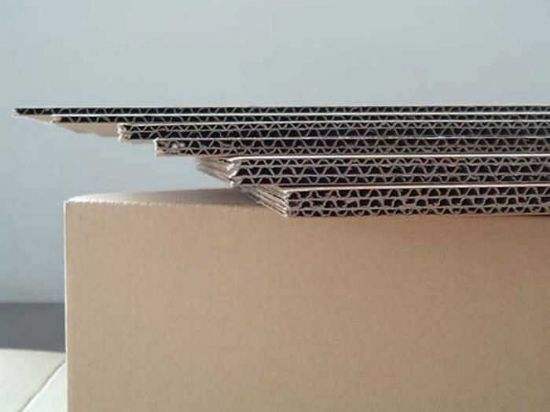
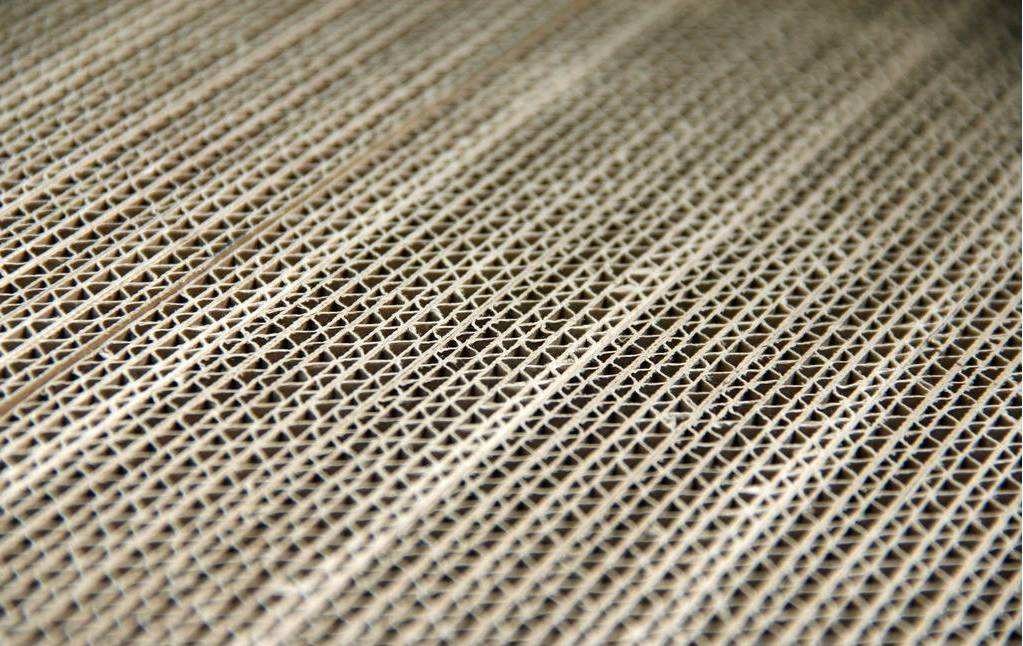
Cross‑section of three‑layer corrugated cardboard, illustrating the fluted medium sandwiched between two liners for optimal strength and cushioning.
High‑precision CAD rendering showing the die‑line template of a Meiyastand display stand, with fold lines and slot positions annotated.
Robotic arms on a high‑speed production line die‑cut and glue corrugated panels into custom single‑wall and double‑wall sheets.
Meiyastand components flat‑packed and stacked, ready for space‑efficient, crush‑resistant transport to retailers.
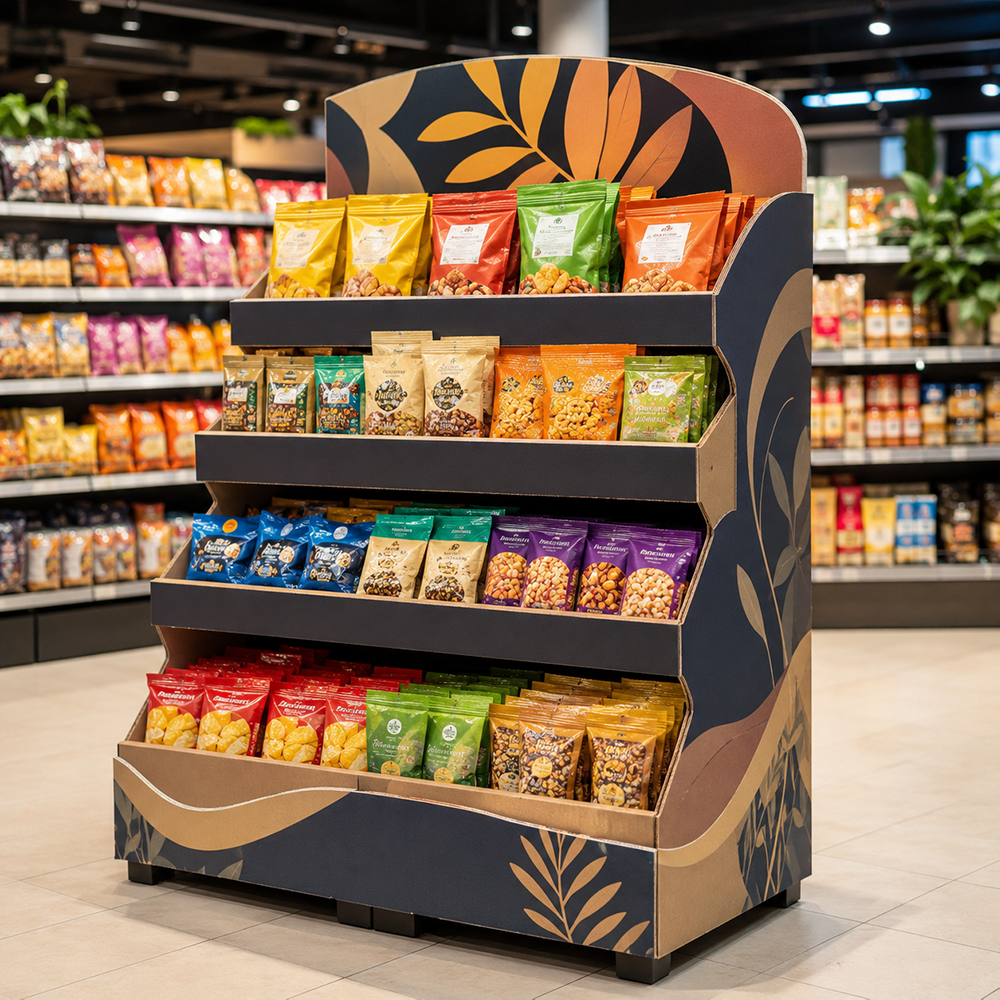
Finished Meiyastand display stand slot‑fitted and standing in a retail space—sturdy, minimalist, and made entirely from recyclable cardboard.
Useful Links:
Corrugated cardboard basics
• Fibre Box Association overview of corrugated structure, linerboard, and medium Fibre Box Associaton
• Composition and terminology explained for linerboard and medium Shorr Packaging
• Corrugated board grades and how the board is formed GWP Group
Flute types and board options
• Quick guide to flute sizes and common use cases ProPac Materials
• Corrugated flute types overview with practical specs Shipmaster Containers Ltd
Strength testing and specifications
• ISO 3037 scope for edgewise crush resistance testing 国际标准化组织
• TAPPI T 804 compression test for fiberboard shipping containers TAPPI
• TAPPI Journal article on edge crush testing methods and box compression modeling TAPPI
Recycling and sustainability data
• US EPA paper and paperboard material specific recycling data, including corrugated boxes 环境保护署
• US EPA containers and packaging data for corrugated boxes generation and recycling 环境保护署
Packaging design, CAD, and dielines
• What a dieline is and why it matters for packaging and displays 贾姆斯敦容器公司
• Dieline design lesson for packaging structures and artwork alignment Packaging School
• Esko ArtiosCAD structural packaging design software overview Esko
• Esko article on packaging design with CAD workflows Esko
Die cutting and production process
• Die cutting process overview used in packaging production PakFactory
• How rotary die cutting works in packaging operations 日出制造
Suggested internal links for your site
• Corrugated cardboard display stands
• Flute types A B C E F
• Single face, single wall, double wall, triple wall
• ECT and BCT testing for display strength
• Dieline and CAD prototyping for displays
• Flat pack shipping and quick assembly display stands
Latest Posts
All Posts