Sustainable POP (Point of Purchase) Paper Displays: A 2025 Market & Evidence Report
Paper POP displays turn sustainability into sales: recyclable fiber, flat pack logistics, FSC labels, and proven display lift for faster, lower cost rollouts.
Back to blogs
Brands face a double challenge. They need to capture shoppers at the moment of choice and they need progress on sustainability that can stand up to scrutiny. Paper based POP displays such as corrugated floor stands, sidekick units, counter displays and pallet skirts offer a rare win. The material is light, it ships flat, it is widely recyclable, and it works with trusted sourcing marks such as FSC labels that reinforce credibility. Shopper research continues to show that displays lift conversion at the shelf, so a greener approach does not mean a sales trade off. This report reviews what changed in 2024 and 2025 including consumer expectations, recycling rates and labeling rules. It quantifies the business upside and lays out a practical checklist for design, logistics and measurement, drawing on public sources and on the proven capabilities of Meiya Stand and Meiya Printing.
1) Why POP still matters
Even as digital channels grow, many purchase decisions are still made in the store. Studies from POPAI and Shop show that a large share of final choices happen at the shelf. When a secondary display is present, the featured brand is chosen more often. Exact percentages vary by channel, timing and category, but the strategic takeaway is stable. Presence at the point of purchase pays. From an operations view, clearer pricing, easier reach to product and a tidy shelf gap often translate into visible lifts in sell through.
Implication: If the display highlights sustainability while telling the product story, you get an attention boost and a values fit at the same time. That helps communication in the moment and reduces risk around compliance and brand reputation.
2) What shoppers now expect from sustainability
Across multiple independent surveys in 2024 and 2025, a meaningful share of consumers say they will pay a modest premium for more sustainable products and packaging. When asked which packaging attributes matter most, recyclability consistently ranks near the top. Results differ by market, category and price band, but one pattern is clear. When brands can explain material sourcing and end of life in plain language, shoppers respond more positively. The premium paying segment moves with the economy, which means in store messaging should be concise and specific.
3) Why paper POP is competitive in a prove it era
a) Real world recovery beats wishful recycling
Paper and cardboard enjoy high actual recovery rates in many regions. This advantage over many plastics is easy for shoppers and store staff to understand. It also makes the end of life message more credible. Lines like Please recycle this display with the store cardboard work because they are both accurate and practical.
b) A circular input story you can tell
Corrugated board commonly contains recycled fiber. Because an average recycled content already exists, brands can give a simple and truthful note about circular inputs without heavy jargon. Accuracy matters more than dramatic claims.
c) Lightweight and flat pack logistics
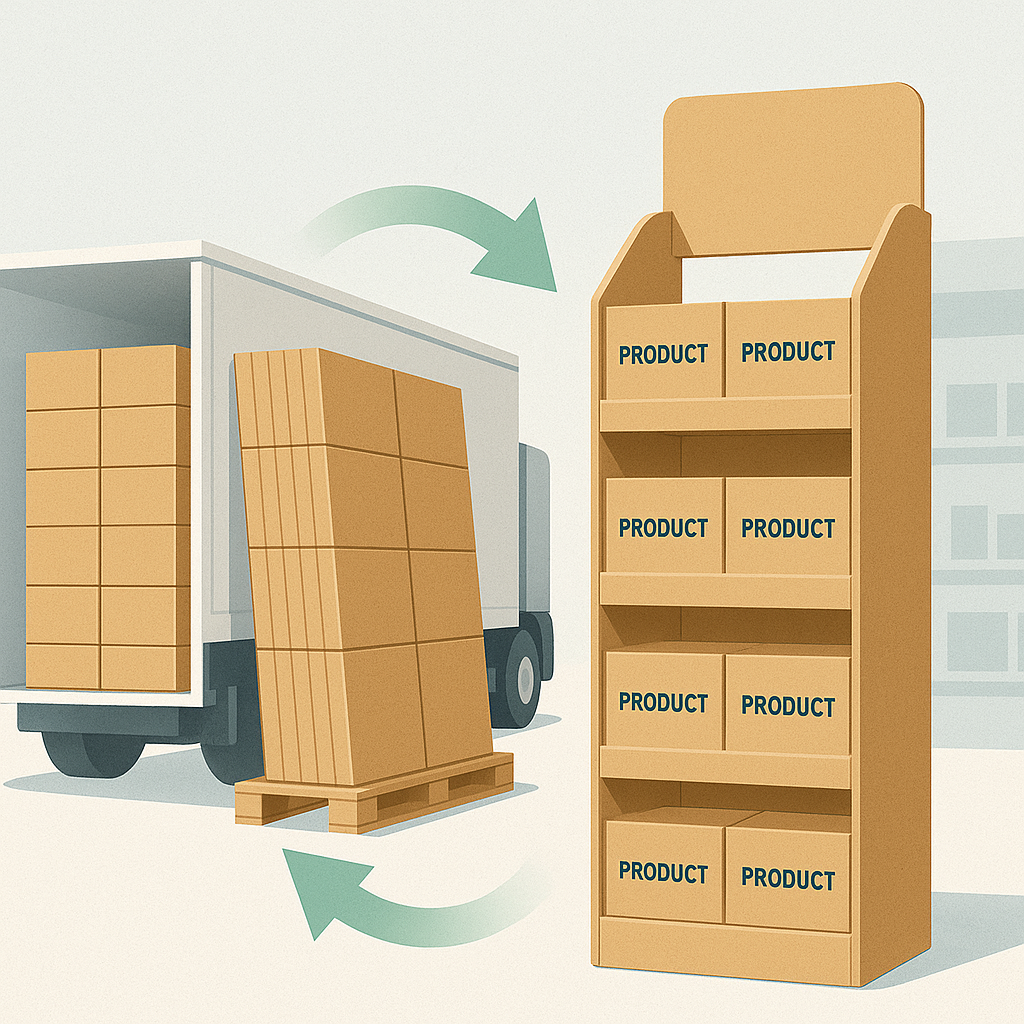
Paper displays are light and fold flat, which improves pallet density and truck cube. The same transport capacity reaches more doors and reduces damage and carbon from moving air. Stores appreciate solutions that take less back room space and set up quickly, and shoppers increasingly notice wasteful void space.
d) Credible sourcing labels
FSC chain of custody provides controlled sourcing across the process. Shopper facing marks such as FSC MIX or FSC 100 percent make that control visible. When used with a short explanation and certificate codes, these marks support both retailer compliance and on display credibility. Following the official rules for size, clear space and wording is essential.
e) Print quality with recovery in mind
Modern CMYK on corrugated produces clean, vivid graphics. Combined with water based inks and recovery friendly coatings, you can balance visual impact and recyclability. For seasonal or promotional programs this combination usually meets brand standards without adding end of life friction.
4) The commercial case: total landed cost and speed
- Lower landed cost. Material and converting costs are more manageable than metal or acrylic. Flat pack shipping reduces dimensional weight charges. Tool free structures cut store setup time. Together these effects create meaningful unit savings at scale.
- Faster cycle time. Moving from CAD to shelf often takes weeks rather than months. That tempo suits seasonal windows and pilot tests, so teams can validate a merchandising idea and observe results sooner.
- Network efficiency. Better pallet density and right sized packs send more units per truck and occupy less back room space. The result is steadier execution with fewer hidden labor and coordination costs.
5) Turn sustainability into messages that sell
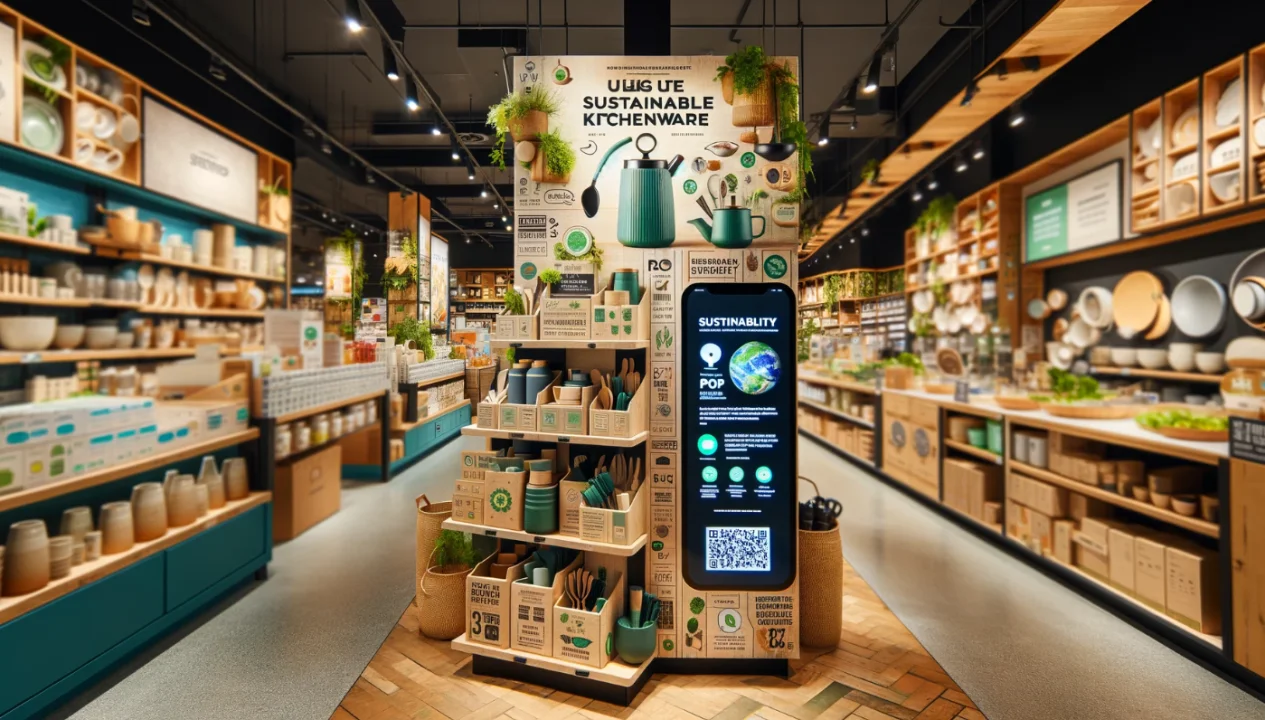
- Micro claim plus icon. For example Display made from responsibly sourced and recyclable paperboard with a small FSC mark. The statement is short and carries high trust without crowding price or product claims.
- Lead with recyclability. Please recycle this display after the promotion is simple and actionable for both shoppers and staff. The simpler the request, the better it gets executed.
- Tell the logistics truth. Ships flat to reduce freight and storage waste is specific and verifiable. It answers growing concern about empty space and overpack.
- QR to a proof page. A single page with certificate numbers, substrate specs and practical handling guidance satisfies audits and helps training and sharing.
6) Design and operations playbook
A. Engineer for logistics
Aim to increase units per pallet and reduce voids. Run a small pilot shipment to record dimensional weight charges and damage, then refine the die line and part layout. Data driven iteration is safer than locking the design too early.
B. Simplify store setup
Use interlocking shelves or tabs and put a pictorial build guide on an inner flap or in the parts bag. Saving a minute or two per store adds up across a network and lifts compliance because more displays are set correctly and on time.
C. Choose materials that can be verified
Specify FSC MIX or 100 percent where possible, water based inks and finishes that are compatible with paper recycling streams. Avoid hard to separate laminations that could complicate recovery.
D. Place the sustainability cue near price or the key benefit
Shoppers look first at price and the primary claim. Keeping the environmental cue in that same visual zone captures attention without adding clutter elsewhere.
E. Measure the outcome
Give each copy variant a unique QR or UTM and run matched store tests. Track sell through, basket attach and setup time per door. Look at trend and difference first, then decide whether to scale.
7) Risks and nuances to avoid greenwash
- Do not over claim. FSC MIX and FSC 100 percent are not the same and must use the correct official wording and artwork. If you publish a recycled content percentage, align it with supplier specifications.
- Recycling access varies by region. Use current data that matches the market where you sell and avoid legacy numbers.
- Life cycle trade offs are context dependent. Corrugated, reusables and plastics perform differently across impact categories and use cycles. For promotions and seasonal POP, focus on recyclability, sourcing proof and logistics efficiency. That is factual and defensible.
8) Supplier snapshot: Meiya Stand and Meiya Printing
- Materials and compliance. FSC materials and ISO 9001 quality management support retailer documentation and audits. This matters for large chains with strict checks.
- Sustainability by design. FSC board, water based inks and recyclable structures are standard. Flat pack formats and tool free assembly reduce complexity and time.
- Range and agility. From counter display units to multi tier floor stands and pallet displays, with friendly minimums and quick production for pilots and seasonal peaks. The approach makes test then scale a practical path.
9) Sample spec you can drop into a brief
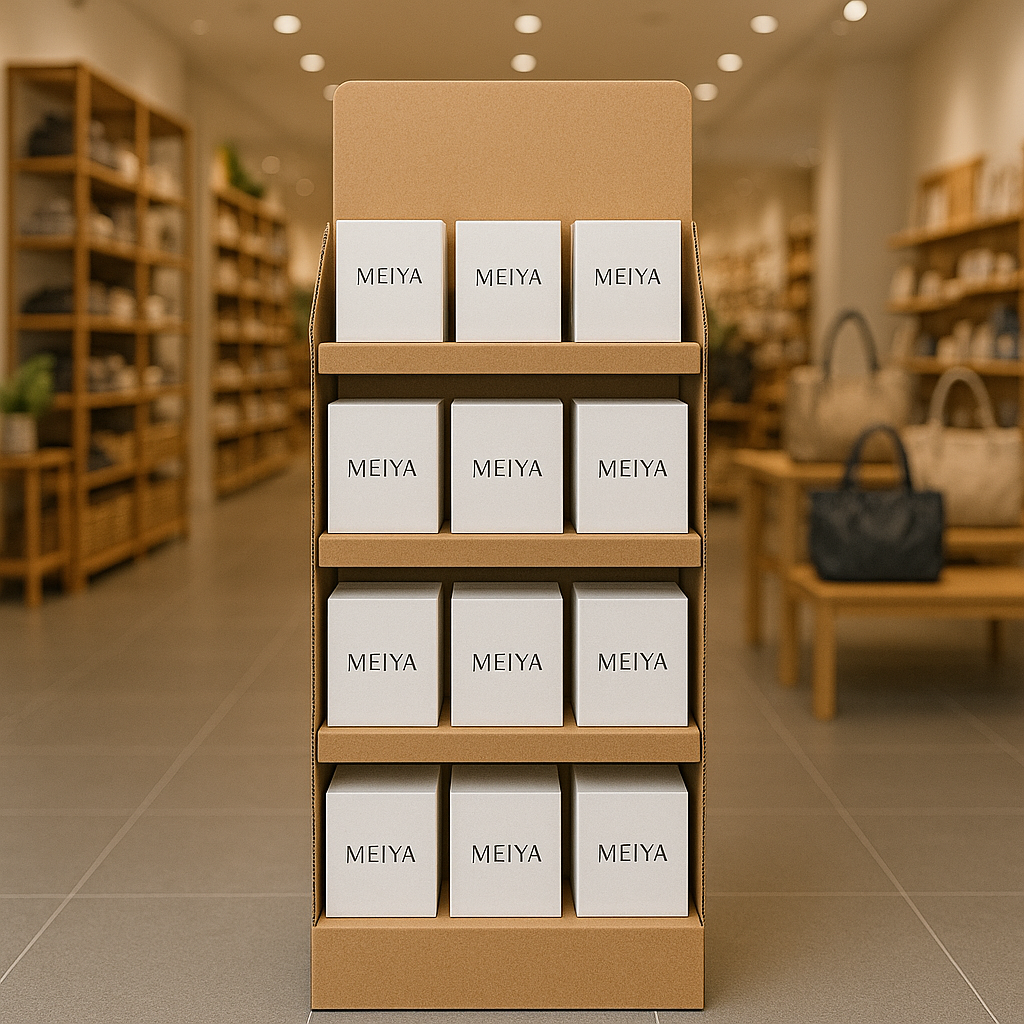
- Format: four or five tier corrugated floor stand with optional sidekick
- Board: FSC MIX with E or B flute combination, average recycled fiber about 52 percent by industry norm
- Print: CMYK with water based inks and an aqueous top coat that remains recycling friendly
- Pack: ships flat as a single carton kit, palletized for maximum cube use
- Header claims: FSC certified materials, Please recycle this display, Ships flat to reduce freight and storage waste with a QR to the proof page
- KPI plan: sell through, attach rate, setup time, compliance photos, QR scans by store cluster. Review weekly and keep raw door notes for clear post analysis.
10) TLDR for decision makers
Paper POP helps brands create presence at the shelf and lines up with the two sustainability cues shoppers recognize most. Recyclability and responsible sourcing. It usually delivers lower landed cost, faster time to market and proof that can be shown on the display itself. When flat pack and right sizing reduce freight and storage waste, the advantage grows. If you want a greener, faster and more measurable rollout, corrugated POP is the practical choice.
Useful Links:
Reference list
- AF&PA. (2025, August). How much paper was recycled in 2024? Retrieved August 20, 2025, from the American Forest & Paper Association website. afandpa.org
- AF&PA. (2024, November 13). Paper industry announces 2023 U.S. paper recycling rates (updated methodology). Retrieved from AF&PA. afandpa.org
- Deloitte. (2025, January 14). Sustainability has staying power. Retrieved from Deloitte Insights. Deloitte
- FSC. (n.d.). Chain of custody. Retrieved 2025 from fsc.org. fsc.org
- FSC. (2021). FSC-STD-50-001 V2-1: Requirements for use of the FSC® trademarks. Retrieved from fsc.org. fsc.org
- Fibre Box Association. (n.d.). Corrugated is recyclable. Retrieved 2025 from fibrebox.org. Fibre Box Associaton
- Fibre Box Association. (2023, August 15). Boxes remain a recycling success story. Retrieved from fibrebox.org. Fibre Box Associaton
- Fibre Box Association. (2023). 2020 LCA of the U.S. average corrugated product (full report). Retrieved 2025. Fibre Box Associaton
- McKinsey & Company. (2025, June 24). Sustainability in packaging 2025: Inside the minds of global consumers. Retrieved from mckinsey.com. McKinsey & Company
- McKinsey & Company. (2025, June 4). Do U.S. consumers care about sustainable packaging in 2025? Retrieved from mckinsey.com. McKinsey & Company
- National Retail Federation. (2023, April 10). Consumers care about sustainability—will they pay more? Retrieved from nrf.com. nrf.com
- POPAI / Retail Customer Experience. (2014, Feb 12). POPAI releases 2014 Mass Merchant Study results. Retrieved from retailcustomerexperience.com. Retail Customer Experience
- Shop! / POPAI (summary). (n.d.). In-store decision rate and display impact. (Secondary summary article.) en.nvc.nl
- DS Smith via Recycling Today. (2025, Mar 2). Survey: Consumers notice empty space; associate it with poor sustainability. Retrieved from recyclingtoday.com. Recycling Today
- Onramp Funds. (2025, Apr 24). How packaging impacts shipping costs. Retrieved from onrampfunds.com. onrampfunds.com
- Meiya Stand. (n.d.). Home page—materials & inks. Retrieved 2025. meiyastand.com
- Meiya Stand. (n.d.). Compliance & certifications. Retrieved 2025. meiyastand.com
- Meiya Stand. (2024–2025). Posts: Why paper display stands…; Grocery POS…; OEM/ODM services. Retrieved 2025. meiyastand.com+2meiyastand.com+2
- Meiya Stand. (2024). Three-tier double-sided floor display stand (product page). Retrieved 2025. meiyastand.com
- Meiya Printing. (n.d.). POP Displays: Pallet display features (green, convenient transport, rapid assembly). Retrieved 2025. meiyaprinting.com
Latest Posts
All Posts