RFQ Template for Corrugated POP Displays: Essential Specs for Accurate Quotes
A practical RFQ checklist for corrugated POP displays covering dimensions, board structure, printing, load capacity, packaging, pricing, and quality control.
Back to blogs
A comprehensive Request for Quotation (RFQ) does more than ask for a price. It must clearly inform suppliers of specific production requirements and the performance standards the display stand must meet in actual retail environments. Missing key specifications can lead suppliers to make different assumptions about cardboard grades, reinforcement, printing, packaging, and lead time. This makes quotes difficult to compare and often results in unexpected issues during production. Use the following checklist to refine your RFQ and obtain reliable quotes.
What to Include in POP Display RFQs
1) Display type and retail use
Clearly define the display format and retail scenario to help suppliers choose suitable structures and packaging.
Include:
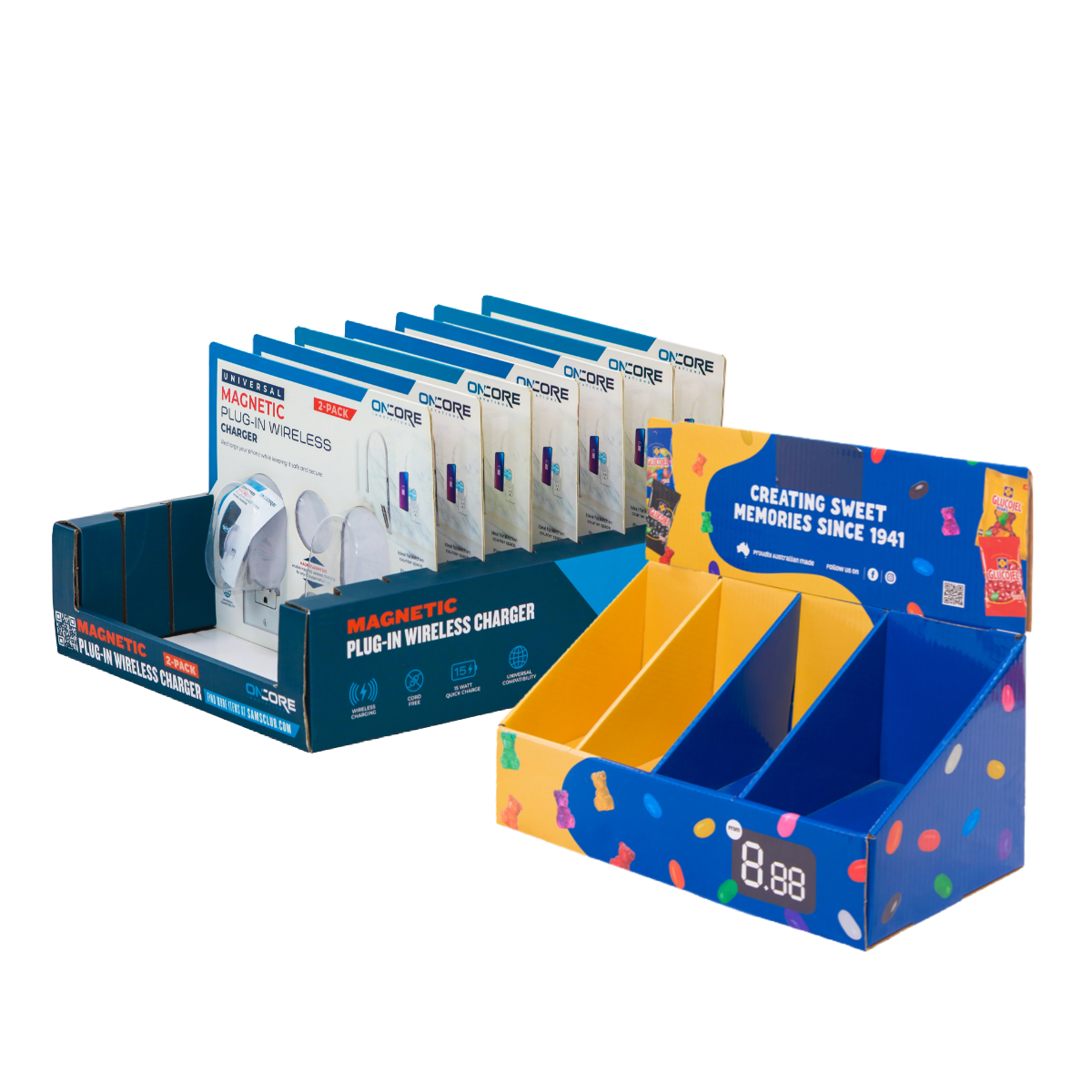
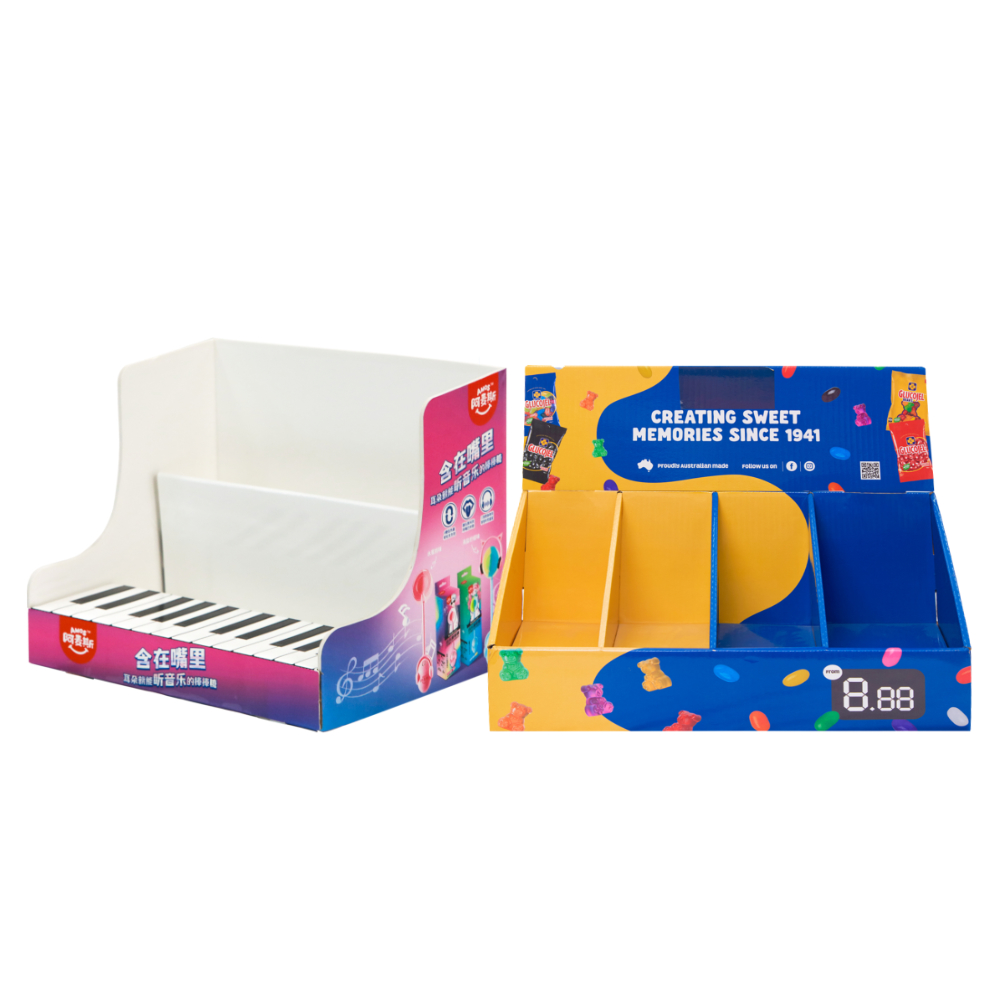
- Display format (floor, counter, sidekick, PDQ shipper, pallet display)
- Product type and packaging (bottled, boxed, bagged, mixed packs)
- Retail environment (grocery stores, pharmacies, membership stores, specialty shops)
- Promotion cycle and restocking frequency (one-time setup vs. cyclical replenishment)
2) Dimensions, footprint, and key fit points
Provide assembled dimensions and footprint limits. If store display limitations exist, list them explicitly.
Include:
- Assembled size (W × D × H)
- Footprint and height limits, if any
- “Must-match” specifications (e.g., shelf spacing, base gaps, header height, or pallet dimensions)
- Tolerance specifications for key fit points (clips, slots, shelf spacing), e.g., ±1–2 mm
Tip: Use consistent measurement units throughout (mm or inches).
3) Sheet structure, flute type, and strength targets
Define the corrugated board structure and flute type. Then set the primary strength standard and keep it consistent.
Include:
- Single-wall or double-wall corrugated board
- Flute type (E-flute, B-flute, C-flute, or double-wall EB/BC flute)
- Strength targets (commonly ECT) with specified stacking or transport conditions
Example:
“Single-wall E-flute corrugated board with white liner, minimum 32 ECT (or equivalent). Supplier is required to propose paper weight and thickness to meet load-bearing and stability requirements.”
If compression or stacking is critical, specify the actual shipping conditions (carton stack height, pallets, container loading, etc.).
4) Artwork, dieline, and proofing
This phase often leads to ambiguity in RFQs. Define clear file and approval rules to prevent delays.
Include:
- Die-cut line provider
- File format specifications (AI or print-ready PDF)
- Separate cut and crease layers
- Bleed requirements (usually 3 mm or 1/8 inch)
- Proof approval required before mass production
If color accuracy is critical, request printed proofs or actual cardboard mockups.
5) Printing and finishing
Specify printing and surface protection requirements in detail. Request suppliers to clarify their design assumptions.
Include:
- CMYK and any Pantone spot colors, if brand color matching is required
- Coating or protective requirements (matte/gloss, UV, lamination, scuff resistance)
- Supplier’s use of offset, flexographic, or digital printing (supplier may propose)
Additional recommendation:
“Suppliers should specify printing processes and related assumptions in their quotations.”
6) Structure, assembly, load capacity, and stability
This is the performance section, and it is also key to quickly distinguishing high-quality quotes from risky ones.
Include:
- Shelf load capacity (per layer) and total load capacity
- Load types (uniformly distributed, concentrated loads, mixed placement)
- Reinforcement solutions (double-layer shelves, internal supporting frames, reinforced bases)
- Assembly requirements (tool-free installation, locking designs, pre-glued options)
Example requirement:
“Each shelf must support 10 kg of uniformly distributed load without noticeable sagging during standard retail use.”
For validation, add simple test conditions such as 24-hour static load tests.
Also consider stability:
“Display units must remain stable when fully loaded. Prioritize anti-tip designs (wider bases, rear supports, or optional fixing points).”
7) Packaging, palletization, and labeling management
The packaging solution will significantly affect freight costs. Please clarify your requirements and ask suppliers to provide optimized proposals.
Must include:
- Flat-packed and pre-assembled options
- Preferred master carton packing quantities
- Pallet requirements (stretch wrap, strapping, corner protectors)
- Carton labels and shipping markings (SKU, purchase order number, destination, “This Side Up,” etc.)
Tip: To reduce shipping costs, you may request suppliers to propose optimized packaging solutions.
8) Quantity, lead time, shipping terms, and quality
Finalize the commercial terms.
Include:
- Target quantities and step pricing
- Expected lead time after final sample confirmation
- International trade terms (EXW/FCA/FOB/DDP) and delivery location, including whether shipping cost is included
- Quality requirements (inspection standards and AQL levels, if any)
Specify sample requirements if needed:
- Blank samples (structure and pattern)
- Printed samples (printing and finishing confirmation)
- Mold and sample costs, and whether they can be deducted from mass production expenses
Copy-and-paste RFQ paragraph (example)
“We need a retail corrugated cardboard floor display stand. Assembled dimensions: 500 mm (W) × 400 mm (D) × 1500 mm (H). The board structure should use single-wall E-flute corrugated cardboard with white top liner paper, minimum 32 ECT (or equivalent specification). Suppliers should propose liner paper weight and thickness solutions based on load-bearing and stability requirements. We will provide design files (AI or print-ready PDF format) and die-cut line files with separate cut/crease layers, including 3 mm bleed, for printing. Printing will use CMYK four-color plus Pantone spot colors, with a matte UV coating for scuff resistance. Products must feature a tool-free snap-lock assembly design with die-cut shelves incorporating front edges. Each shelf must support 10 kg of uniformly distributed weight without noticeable sagging under standard retail conditions, with a recommended 24-hour static load test. Display units must remain stable under fully loaded conditions. Physical samples for dimensional and print confirmation are required before mass production. Ship in flat-packed master cartons, palletized and wrapped with stretch film. Provide a quote for 100 units with step pricing. Target lead time is approximately 3 weeks after final confirmation. Delivery terms: EXW (FCA negotiable). Finished products must meet AQL 2.5 standards with no major defects. The quote should include mold and sample costs and specify all assumptions.”


RFQ template for corrugated POP displays covering board grade, structure, printing, load capacity, packaging, lead time, and quality requirements for more accurate supplier quotes.
Useful Links:
A practical follow-up for readers who want to go deeper into board grade, flute selection, reinforcement, load paths, and sample validation before mass production.
Useful for buyers comparing board options, flute types, print surface quality, and finishing choices before sending RFQs to suppliers.
Helps connect RFQ specs with real buying decisions such as load capacity, store placement, shipping efficiency, and branding needs.
A good support article for the “display type and retail use” section, especially when buyers are still deciding the right format before requesting quotes.
Adds context around cost drivers such as material choice, structure, format, print finish, customization complexity, and logistics, which directly affect quotation accuracy.
Reinforces the RFQ sections on sample approval, inspection standards, load testing, print consistency, packaging checks, and shipment quality requirements.


.jpg)