Cardboard POP Displays: A Practical Guide to Printing and Materials
Cardboard POP displays perform best when materials, structure, and print finishes are aligned early—ensuring efficient shipping, fast assembly, strong load performance, and premium shelf impact.
Back to blogs
A quick way to think about POP displays
Quickly Grasp the Key Points of POP Displays
Cardboard POP displays are miniature masterpieces of retail engineering. They must impress at first glance, ship efficiently, assemble quickly, and remain stable through weeks of restocking and shopper contact. The simplest way to achieve this is by coordinating materials, structure, and print finishing before the artwork is finalized.
Start with the right board, not just looks
Most POP displays use corrugated board, a composite of fluted core and liner paper. Your first decision is board structure:
Single-wall corrugated board
Suitable for most counter displays and lightweight products. It keeps costs and shipping weight down while assembling quickly.
Double-wall corrugated board
It provides added rigidity and crush resistance for taller, heavier product assortments and longer-cycle campaigns. If you need shelves to stay straight and bases to remain sturdy after handling, the double-wall structure is often the safer choice.
Corrugation type affects printing and performance
Fine flutes like E-flute are often used for clearer patterns and more precise die-cutting. Larger flutes can enhance stiffness and cushioning for heavier loads or harsher handling conditions.
To create premium-looking panels, processors may apply cardboard coatings to specific surfaces. Two common solutions include:
- SBS Cardboard: Delivers a bright, smooth printed surface with strong visual impact.
- CCNB Cardboard: Features a coated printing surface while meeting recycled material requirements.
Practical Advice: Choose the lightest cardboard that meets your product's weight, handling conditions, and campaign length.
Match design to display location
An effective checkout counter display may not suit the main aisle. Select the core display solution based on actual functionality.
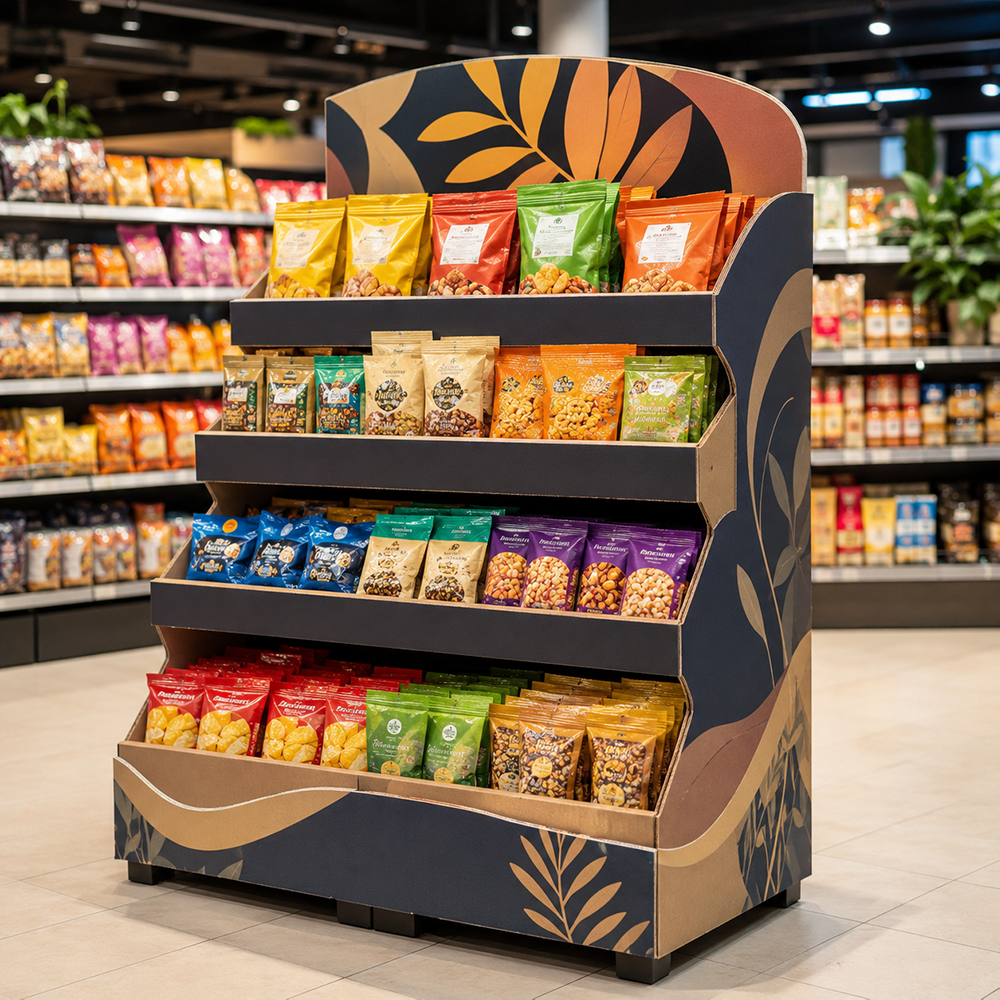
Food section display shelves
These shelves endure more impact, restocking, and shopper contact. Prioritize base rigidity and compression resistance. Base reinforcement and shelf support usually outweigh printing upgrades.
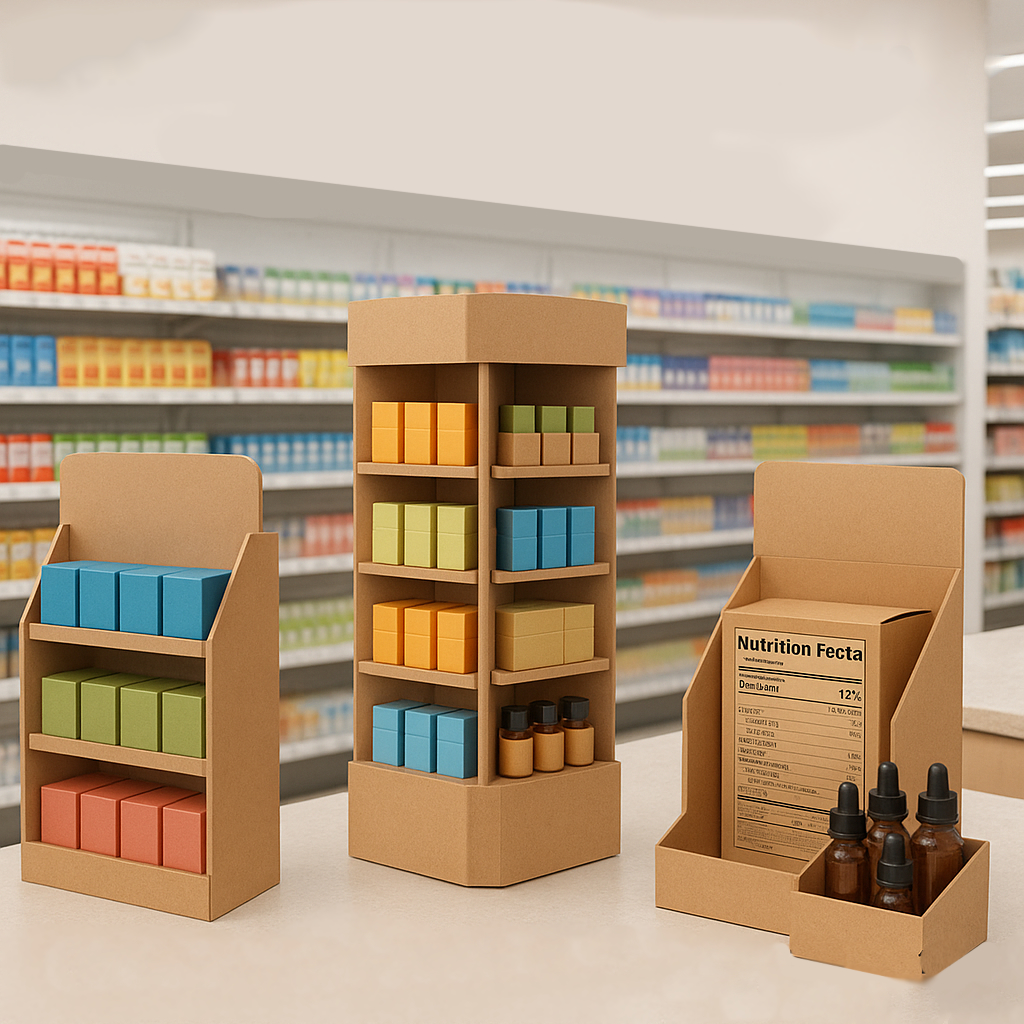
Three-tier removable top counter display
Aim for speed, clarity, and neat presentation. Smoother corrugation structures and simplified printing can enhance product quality without adding extra weight or cost.
Make strength values clear and visual
Purchasers often struggle to understand how specifications translate to real performance.
Edge Crush Test (ECT)
Measures edge compression strength, evaluating the stacking load capacity of cardboard layers.
Compression testing
Applies load from above until deformation. This test better simulates practical applications by accounting for structural design, crease handling, joint points, and assembly techniques.
Procurement Note: Corrugated specifications are a starting point, not a guarantee. The most reliable approach is to validate with physical samples loaded with actual products, then adjust board grades or reinforcement based on testing results.
Structure is the foundation of display stands
Most store failures stem from structure issues rather than visual design. Even with flawless appearance, display stands may fail if load paths are unclear.
Field-proven rules:
- Place heavy items near the base whenever possible.
- Avoid excessive unsupported shelf spans; add mid-supports or shorten spans.
- Reinforce high-stress points, especially shelf-to-sidewall joins, base corners, and handle cutout areas.
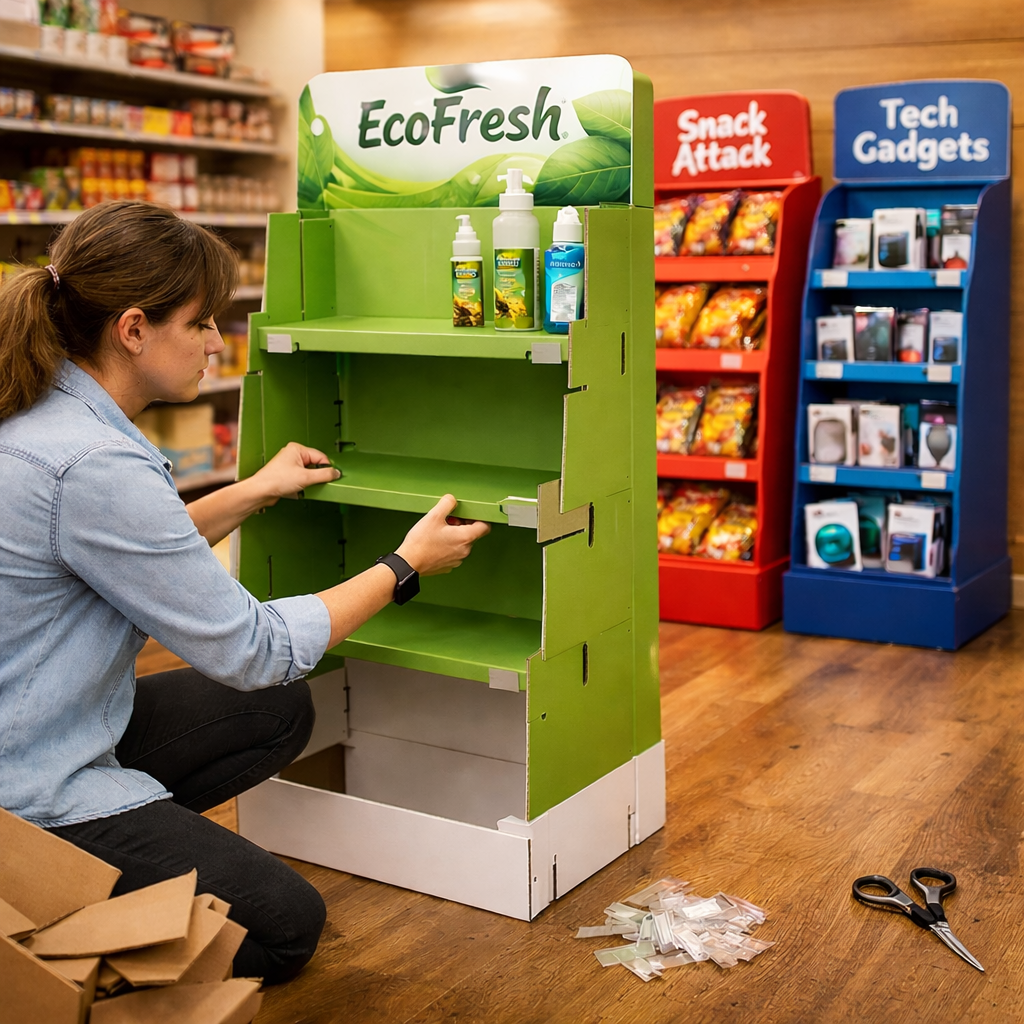
- Design anti-mis assembly structures. Reduce part quantity and optimize locking functions to lower store assembly errors.
Die-cutting and creasing processes determine final quality. For mass production, rotary die-cutting is widely used due to its speed and high stability when paired with precision molds. Simpler structures achieve higher production efficiency with less incidents.
Select the printing method that aligns with your production run, timeline, and brand positioning
The "best" printing method depends on your optimization goals.
Flexographic printing
Ideal for direct printing on corrugated boxes and mass production, offering high efficiency and notable scale advantages.
Offset printing
The preferred choice when you require clear, sharp, high-resolution images.
Offset printing with lamination
Print premium graphics on linerboard, then laminate onto corrugated boxes. Balance strength with shelf appeal. Excellent visual impact, but requires extra steps, ensure it creates tangible value.
Digital printing
Suitable for sample production, seasonal runs, and multi-version marketing campaigns. Plate-free, rapid revisions, and shorter approval timelines.
Save days on prepress details
Many delays arise from avoidable prepress issues:
- Use the color profile provided by your printer and follow ink restriction guides.
- Place confirmed trim lines on separate layers.
- Set trim lines as spot colors with overprinting enabled to prevent pattern masking.
- Maintain adequate bleed margins outside trim lines. Standard default is 1/8 inch unless supplier specifies otherwise.
- Provide confirmed proofs before production, ideally with color calibration to production process.
Surface finishing that protects display quality without creating new issues
Surface treatments enhance scratch resistance and shelf appeal while impacting folding performance and recyclability expectations.
Common options include: varnish, water-based coatings, UV coatings, film lamination, and tactile effects like embossing. Determine the treatment early and confirm:
- No cracking or whitening at creases.
- No displacement of components during packaging or assembly.
- Coating processes align with product lifespan goals.
When recyclability is primary, reducing mixed materials often proves simplest.
Sustainability, cost, and lead time remain core drivers
Cardboard displays are recyclable in most markets, but recycling isn't automatic. Coatings, laminates, thick laminates, and specific adhesives may increase recycling complexity, depending on local recycling schemes and mill requirements.
Cost and lead time are primarily driven by:
- Printing setup requirements (plate-making vs. plate-free processes)
- Die and processing complexity
- Additional processes (e.g., lamination)
- Packaging and shipping solutions
The most reliable way to control budgets and timelines is to lock in these decisions before final design confirmation.
Conclusion
Treat materials, structure, and print production as an integrated system. By coordinating these three elements in the early stages, your POP display stands are more likely to achieve: damage-free shipping, quick assembly, stability at the point of sale, and consistent visual appeal throughout the entire marketing campaign.
Actionable Points
- Determine single- or double-wall corrugated board based on shelf load capacity and anticipated handling methods.
- Establish board strength targets and finished product performance indicators, then validate with samples loaded with actual products.
- Finalize printing solutions early: Flexography suits mass production, digital printing allows rapid iterations, while offset printing with lamination delivers premium visual effects.
- Obtain die-cut and bleed line rules early, placing die-cut lines on a separate overprint layer.
- Design with end-of-life considerations, minimizing mixed materials and verifying surface treatments meet recycling requirements.
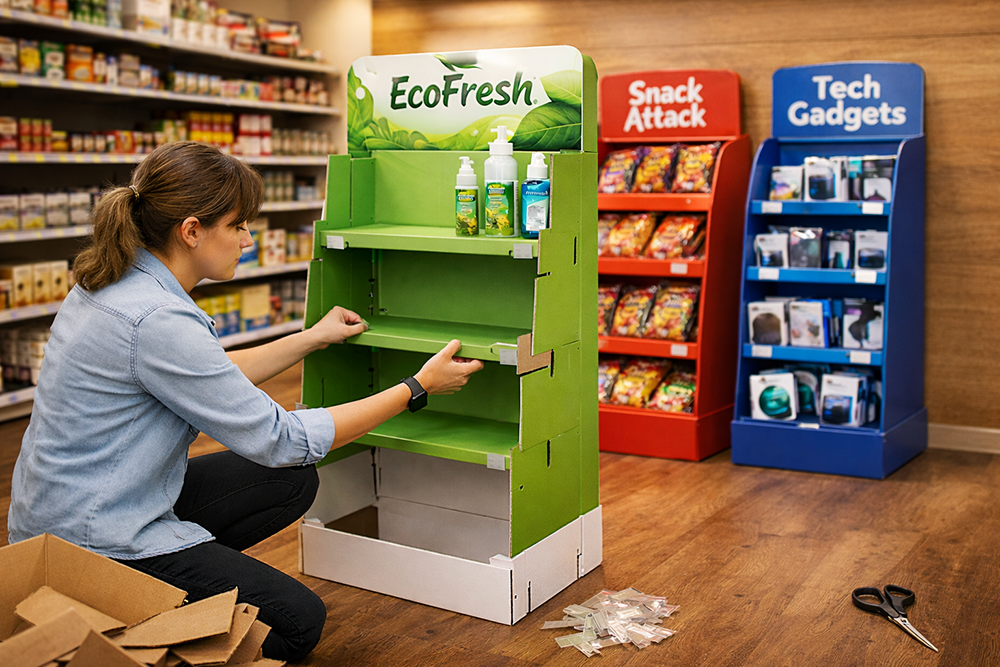
Custom cardboard POP displays: choosing the right corrugated materials, printing method, and finish for retail performance.
Useful Links:
- Structural Design of Corrugated POP Displays: Premium Appearance, Solid Strength
- How to Design Eye-catching Corrugated Cardboard POP Displays
- Understanding PDQ Displays: What They Mean and Why Retailers Use Them
- Floor, Counter, or Sidekick POP Displays: Which One Is Best for Your Product?
- Tool-Free Cardboard Display Stands: Streamlining Retail POP Display Installation
- Corrugated Cardboard Overview
- How Surface Finishes Transform Paper Boxes and Displays Into Customer Magnets
- Pricing Guide: Choosing the Right Cardboard Display
- Quality Control
- Compliance & Certifications
Latest Posts
All Posts