How Product Packaging Influences Custom Cardboard Display Design
How product packaging shapes custom cardboard display structure, strength, artwork, sustainability, and retail performance from design to rollout.
Back to blogs
Executive Summary
A custom cardboard display should not be designed separately from the product packaging. The package size, shape, weight, material, graphics, and retail handling requirements all will affect how the display should be structured, printed, packed, shipped, and used in-store.
For brands and retailers, confirming packaging details early helps improve shelf fit, loading strength, product visibility, assembly, restocking, and in-store performance.
Introduction
A cardboard display is more than a printed stand placed in a store. It must hold real products, fit actual packaging, withstand transportation, and remain easy for store teams to assemble and restock.
That is why product packaging plays such an important role in custom cardboard display design. Before choosing the display style, board grade, shelf structure, or graphic layout, designers need to understand the product package itself.
Is the product packaging tall or short? Heavy or lightweight? Is it boxed, bagged, bottled, or blister-packed? Can it stand upright? Can it be hung on hooks? How many units should the display hold? Will it be placed on a counter, at an end cap, as a secondary display, or on a pallet?
These details may seem simple, but they directly shape the final display solution.
Product Size and Shape Decide the Display Structure
Packaging size and shape influence the basic structure of the display.
Regular boxed products are usually easier to stack, face outward, and display neatly on shelves. Smaller cartons are suitable for counter displays, shelf trays, PDQ displays, or compact floor displays. Larger packages may require broader shelves, sturdier side panels, and wider spacing between layers.
Irregular packaging needs more careful planning. Pouches may need trays or dividers to stay upright. Bottles may need front lips or separators to prevent shifting. Blister packs may require hooks or pegboard-style structures. Tall or narrow products may need extra support to reduce tipping risk.
If the packaging is designed for hanging, the display should be compatible with the hanging hole locations, product width, and hook spacing. If the packaging is not hook-ready, the brand may need to add hanging rings, sleeves, or secondary packaging before selecting a hook-style display.
In short, the structure of the display stand should align with the product packaging design, rather than working against it.
Product Weight Affects Strength and Board Selection
Product weight is one of the first details designers should evaluate in cardboard display development.
A display may look good in artwork but still fail if product load is not calculated properly. Heavy products place pressure on shelves, side walls, base panels, and connection points. If the board grade is too weak or the shelf span is too long, the display may bend, lean, or collapse once fully loaded.
Lightweight products may only need a simple single-wall corrugated structure. Heavier items may require double-wall corrugated board, stronger fluting, reinforced shelves, inner supports, or a stronger base.
Weight distribution also matters. In many display projects, heavier products should be placed closer to the bottom to improve stability. High-stress areas such as shelf corners, side locks, and the bottom panel may also need reinforcement.
A reliable custom display should be tested with actual packaged products, not only empty samples. This helps verify shelf strength, balance, and loading capacity for real in-store use.
Packaging Graphics Guide for Display Artwork
Packaging also defines the visual style of the display.
A well-designed cardboard display should feel like a natural extension of the product package. Colors, logos, product images, fonts, and key selling points should align with the primary packaging. When the package and display share a consistent visual language, shoppers can recognize the brand more quickly.
This is especially important in busy retail environments, where displays compete with shelves, signage, promotions, and other brands. If the display design clashes with the product packaging style, the overall presentation may appear disconnected.
For example, if the product package has a clean premium look, the display should avoid overcrowded layouts. If the package highlights natural ingredients, eco-friendly features, or a seasonal promotion, the display can reinforce the same message through the header, side panels, shelf lips, and front panel.
The goal is not to repeat every detail from the package, but to make the display and product work as one cohesive retail presentation.
Packaging Material Influences Sustainability Choices
As more brands and retailers prioritize sustainable packaging, display design should follow the same principles.
If a product uses recyclable cardboard or eco-friendly branding, the display should minimize plastic parts and hard-to-separate materials. A cardboard display made with recyclable corrugated board can help extend the same sustainability message in-store.
This affects board selection, printing methods, surface finishes, connectors, and end-of-life handling. Brands may choose FSC-certified board, water-based inks, recyclable corrugated structures, and fewer plastic accessories.
Flat-pack packaging design is also practical. Flat-pack displays reduce shipping volume and improve pallet loading efficiency, enhancing logistics efficiency. Tool-free assembly and easy takedown after use make these displays more convenient for retailers to set up and recycle.
When packaging and display designs follow the same sustainability principles, the brand message appears more consistent and credible.
Retail Location Changes the Final Display Format
The same product package may require different display solutions depending on where it will be placed.
Small snack packages for impulse purchases may work well in countertop displays or PDQ trays. Cosmetic products may need clean shelf displays with strong brand visuals.
Lightweight impulse-buy items are ideal for display in secondary areas on aisle shelves.
Larger or heavier products may require floor displays, pallet displays, or reinforced corrugated stands.
Retail space also matters. Some stores have narrow aisles, while others require specific endcap dimensions. Club stores often need pallet-ready structures, while convenience stores may prefer compact displays that are easy to refill.
In-store handling should also be taken into account. If products need frequent restocking, the display should allow quick refills without damaging the structure or making the presentation look messy. For large rollouts, assembly should be simple and consistent across different store locations.
A good display is designed not only for the product, but also for the actual retail environment.
What Buyers Should Prepare Before Starting a Display Project
To make the design process smoother, buyers should prepare key packaging information before requesting a custom cardboard display quote.
Useful details include product dimensions, product weight, packaging material, product photos, artwork files, packing quantity, display capacity, retail location, shipping method, and retailer compliance requirements.
It is also helpful to clarify how the product should be displayed. Should it stand, stack, hang, or sit in trays? Should shoppers pick products from the front, top, or side? Will the display be pre-packed, flat-packed, or fully assembled in-store?
The more complete the packaging information, the easier it is to design a display that fits the product properly, protects goods during handling, and performs reliably in the retail environment.
Conclusion
Product packaging has a direct impact on custom cardboard display design. It determines the display structure, shelf spacing, loading strength, artwork style, material selection, sustainability planning, and final retail format.
For brands and retailers, focusing on packaging details in the early design stage is essential to achieve the best outcome. Display designs should be based on the actual product packaging, not just visual concepts.
When packaging and display design work together, the final solution is more stable, easier to assemble, brand-consistent, and better suited for real in-store execution. This helps a cardboard display work not only as a promotional tool, but also as a practical part of retail operations.
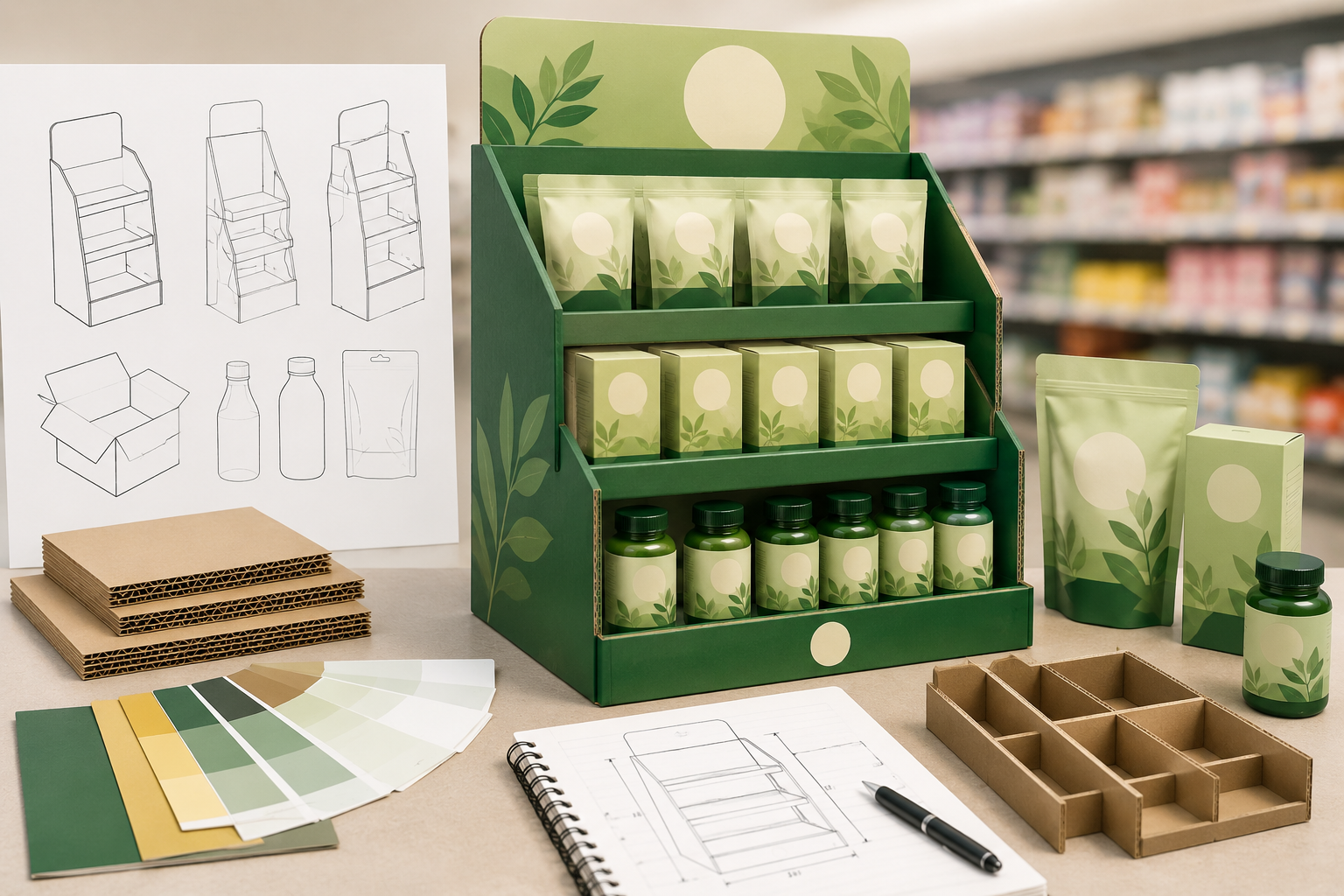

A custom cardboard display concept designed around real product packaging, showing how packaging details guide structure, strength, artwork, and retail presentation.
Useful Links:
Latest Posts
All Posts


.jpg)