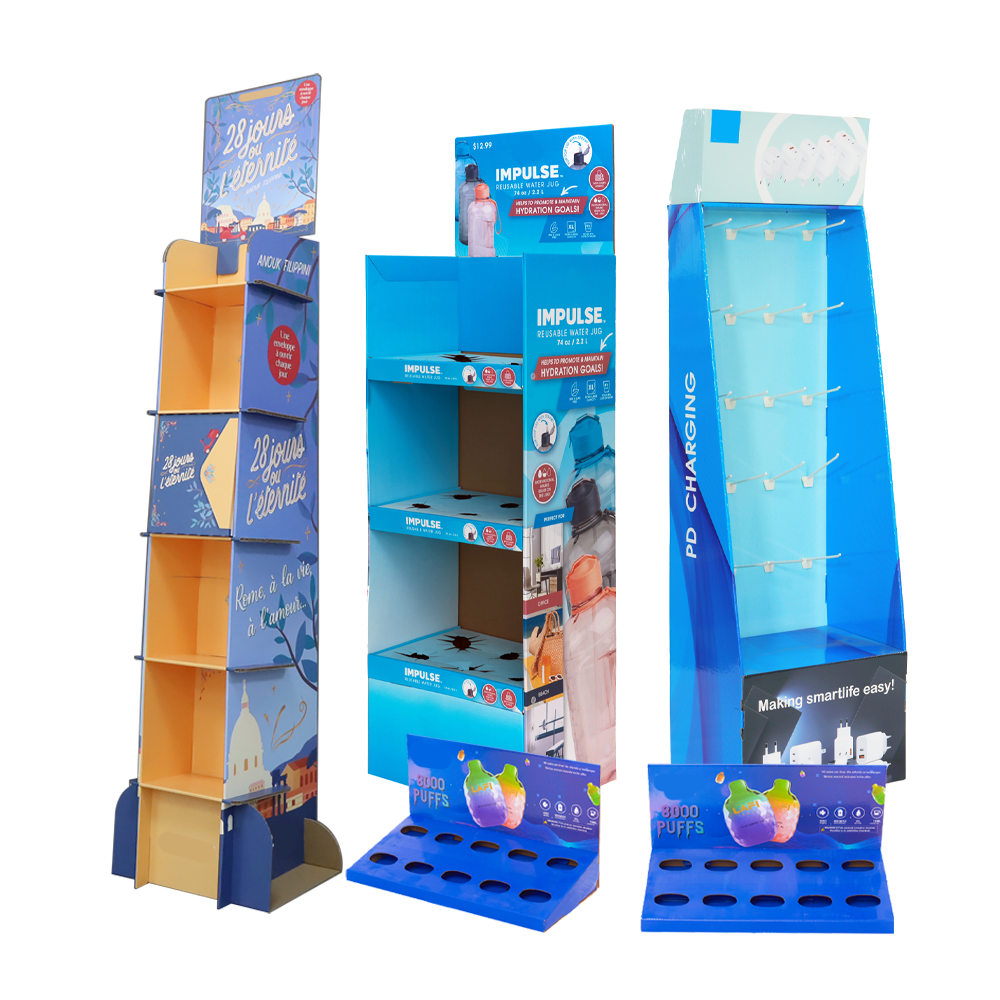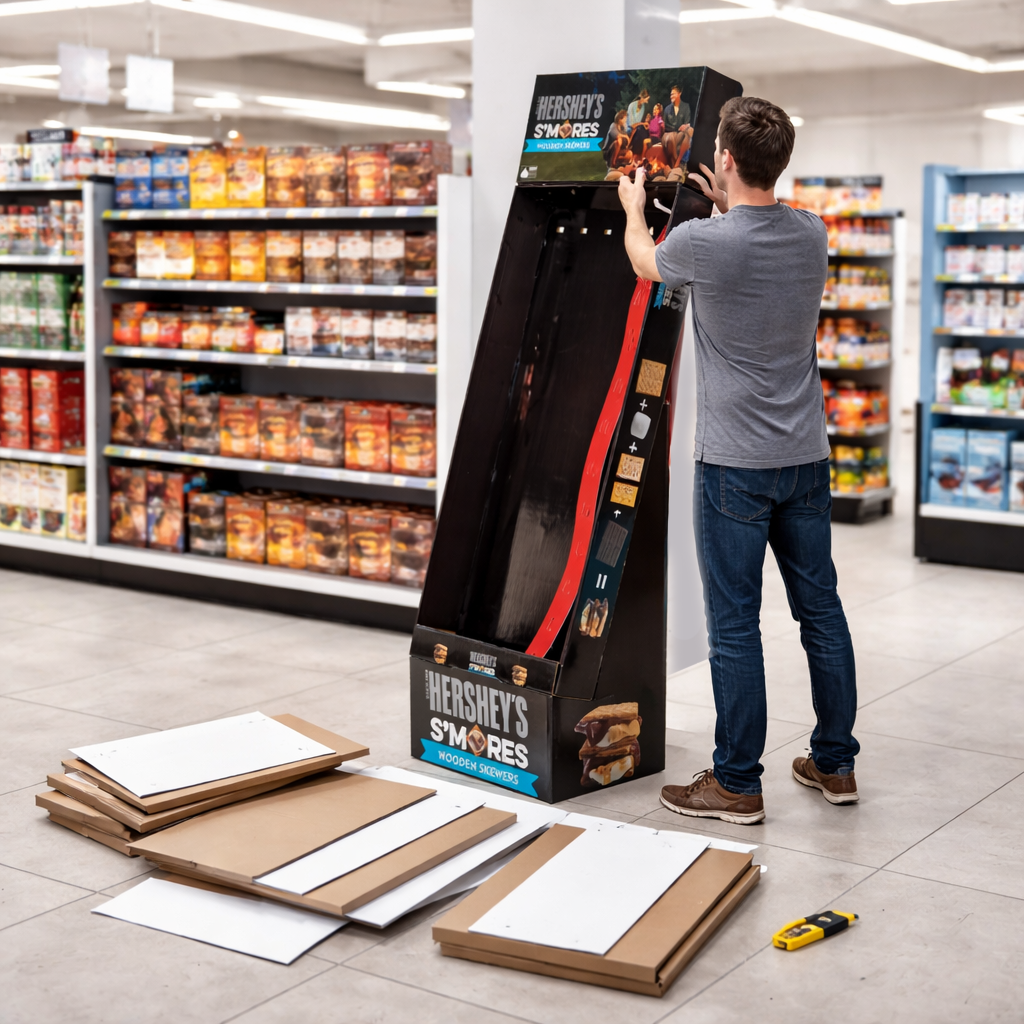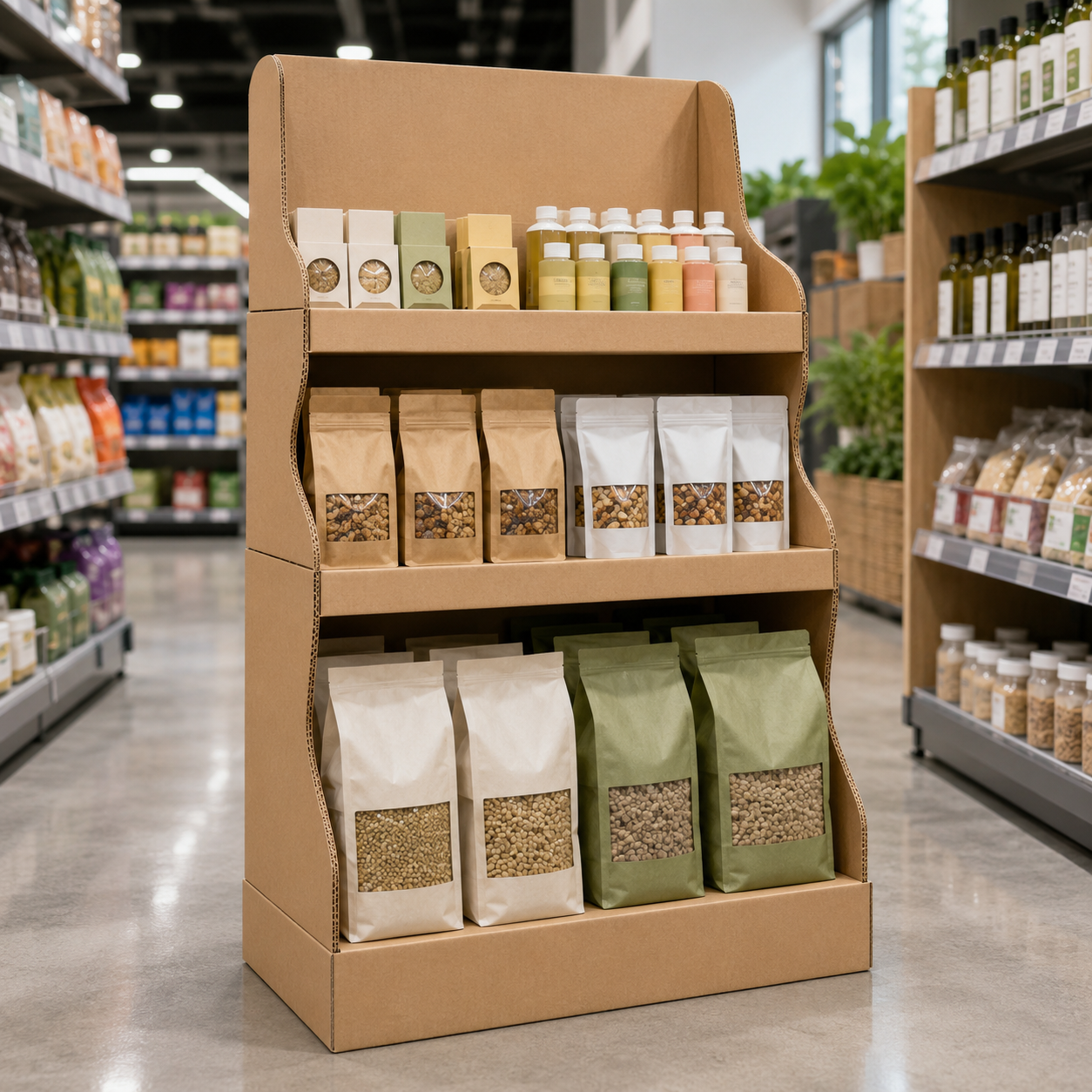
How Product Size Affects Cardboard Display Structure, Capacity, and Retail Performance
Product size affects cardboard display structure, capacity, stability, branding, shipping, and retail performance from design to store execution.
Back to blogs
Product dimensions are one of the first details to nail down in cardboard display design. They directly influence display type, shelf capacity, board selection, reinforcement design, assembly method, shipping safety, and final retail performance.
A cardboard display is more than a printed stand for holding merchandise. It must support real product weight, fit the allocated retail space, make shopping easy, and stay organized as shoppers pick products and store teams restock. That’s why product dimensions need to be confirmed before choosing a counter display, PDQ tray, sidekick display, floor display, or pallet display.
Start with Product Specifications
A professional display project should be driven by the product, not by the display shape alone. Before structural design begins, the design team needs to confirm each product’s height, width, depth, gross weight, packaging format, and planned in-store placement.
These details help answer practical questions. Can the item stand unsupported? Does it need hooks, trays, dividers, or front retaining lips? Will multiple SKUs share one display? Will store teams refill individual products, or replace pre-packed trays in full batches?
Items with similar footprints can behave very differently in a cardboard display. Standard cartons usually sit neatly in uniform rows, while pouches with similar dimensions may lean, sag, or collapse as stock levels drop. Bottles may slide without dividers, and blister packs require hook spacing that matches their hanging hole positions.
Accurate measurements, physical product samples, and clear placement plans create the foundation for a stable, functional, and easy-to-shop display.
Product Dimensions Guide the Display Type
Small and lightweight products often work well with countertop displays, PDQ trays, shelf inserts, and compact sidekick displays. These formats suit impulse items, trial-size products, accessories, cosmetics, snacks, and small electronics. They can maximize facings in limited space, but still need proper tray depth, dividers, or product stops to keep the layout tidy as items are picked.
Medium-size products call for a balance between capacity, stability, and visual clarity. They may work in shelf trays or PDQ displays, but often need reinforced side panels, deeper trays, and stronger shelf support. For multi-SKU layouts, dividers help separate product variants and make it easier for shoppers to compare options.
Large or heavy merchandise usually requires floor displays, pallet displays, or reinforced shelf structures. These displays need wider bases, stronger load points, and controlled shelf spacing. Heavy products are typically placed on lower shelves to keep the center of gravity low. Oversized multipacks may also require stronger corrugated board, reinforced locking tabs, or double-wall construction.
Product Dimensions Determine Display Capacity
Display capacity should be calculated around usable internal space, not just the target product quantity. Final holding volume depends on shelf width, shelf depth, tray lips, divider footprint, product clearance, and shopper picking access.
A simple capacity planning formula is:
Units per shelf = Facings × Depth count
Facings = Usable shelf width ÷ Single product width
Depth count = Usable shelf depth ÷ Single product depth
That explains why two displays with the same outer footprint can hold very different product quantities. Larger products reduce total capacity because they need wider openings, stronger support, and more vertical clearance between tiers. Smaller products allow higher unit counts, but they need clear partitioning to prevent SKU mixing and messy presentation.
For retail buyers, product dimensions also affect cost planning. Displays for compact lightweight goods and displays for heavy multipacks may require different board grades, structural designs, inner packaging methods, and logistics arrangements.
Package Shape and Board Strength Are Equally Important
Physical dimensions matter, but package shape can be just as important. Rigid cartons are usually the easiest format to merchandise because they can stand, stack, and face neatly. Pouches may flex or lose shape when the display is partially stocked. Bottles and cylindrical packs may roll or slide, so they often need separators, angled tray bases, or front stop ledges. Blister hanging goods require accurate hook length, hook spacing, and load limits. Multipacks also need careful weight distribution, as they can place concentrated pressure on the shelf.
Corrugated board grade should match the total load. Fine flute board is often suitable for small, lightweight products because it provides a clean printing surface and enough strength for short-term promotions. Larger or heavier products may need stronger board grades or double-wall corrugated combinations.
However, board thickness alone doesn’t guarantee stability. A display may still deform if the shelf span is too long, the base too narrow, the locking tabs weak, or product weight concentrated near the front edge. Key reinforcement areas include the base, side walls, shelf joints, front lips, back panels, and corner joints.
That’s why prototype load testing with actual products is so important before mass production. Displays should be checked when fully loaded, partially stocked, and nearly empty. These tests help confirm that products stay organized, the structure remains stable, and key graphics stay visible under real shopping conditions.
Product Dimensions Shape Retail Presentation In-Store
A good cardboard display should hold products safely while keeping the presentation clear, accessible, and attractive in the retail environment.
Large packs take up more visual space. If graphics aren’t planned carefully, loaded products may block tray fronts, side panels, or header artwork. For larger items, core brand messages and promotional information should be placed where shoppers can still see them after the display is fully stocked.
Small products leave more room for printed branding, but too many SKUs can create visual clutter. Clear product blocking, color grouping, and segmented trays help shoppers understand the promotion and product assortment more quickly.
Product size also affects store placement. Small impulse items often work well at checkout counters, shelf edges, and sidekick positions. Medium-size products fit category aisles and promotional shelf zones. Large products often perform better in floor displays, endcap displays, or wider promotion areas where shoppers can see them from a distance.
Pre-Production Verification Before Mass Production
Before approving a cardboard display for manufacturing, brand and retail teams should confirm physical product samples, exact store placement, usable loading capacity, artwork visibility, prototype performance, assembly method, refill convenience, and end-of-promotion handling.
Testing the display under full, partial, and nearly empty loading conditions can reveal hidden issues such as leaning products, covered graphics, weak shelf support, or awkward picking access. These checks help reduce production risks before the display moves into mass production.
Pre-production verification is especially important when the display will carry mixed SKUs, heavy products, fragile packaging, or promotional items within limited retail space. A small adjustment to shelf depth, divider position, tray angle, or reinforcement layout can make the final display much easier to assemble, stock, shop, and transport.
Conclusion
Product dimensions influence nearly every key decision in cardboard display development. They affect display format, corrugated board grade, shelf spacing, total capacity, reinforcement design, graphic placement, logistics packaging, and final retail performance.
For custom cardboard display projects, the design process should start with verified product dimensions, physical samples, confirmed store placement, and clear loading requirements. A good solution isn’t defined by the largest frame or the thickest board, but by how well the display matches the product, fits the retail environment, supports safe handling, and creates a smooth shopping experience.
Reviewing product dimensions early helps avoid weak structures, unrealistic capacity estimates, blocked branding, and messy retail execution. For brands planning custom cardboard displays, Meiyastand helps turn product dimensions, loading requirements, retail placement, campaign goals, and production needs into practical display structures that are easier to produce, ship, assemble, and manage in-store.
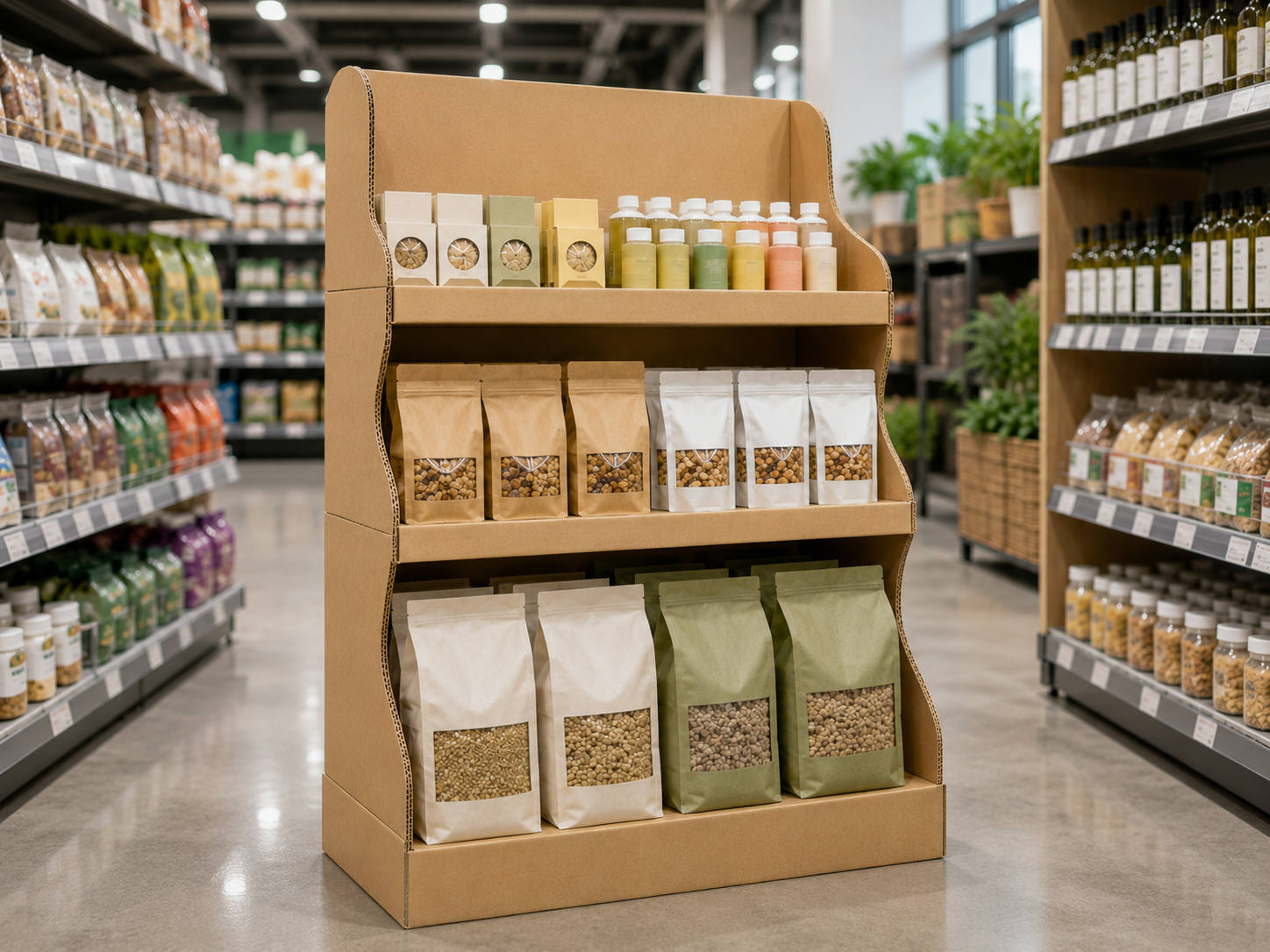
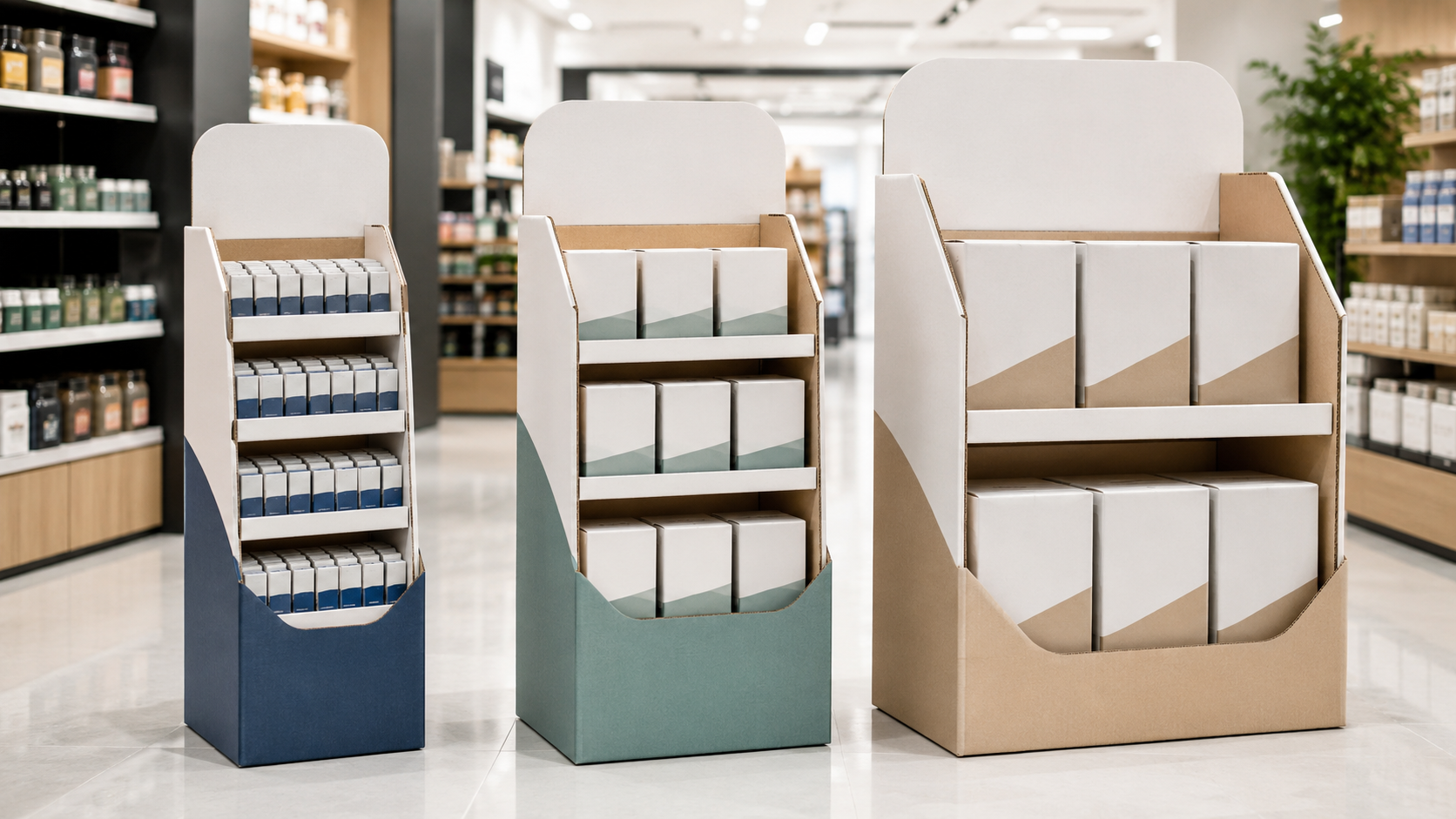
A custom cardboard floor display designed around different product sizes, shelf spacing, and retail presentation needs.
Useful Links:
How to Plan the Right Shelf Capacity for Custom Cardboard Displays
How to Choose the Right Cardboard Display Type for Your Retail Campaign
How Product Packaging Influences Custom Cardboard Display Design
Cardboard Display Prototype Approval: What Brands Should Check Before Mass Production
How to Design a Cardboard Display for Easy Restocking
Why Good-Looking Cardboard Displays Fail in Retail Stores
Cardboard POP Displays: A Practical Guide to Printing and Materials
RFQ Template for Corrugated POP Displays: Essential Specs for Accurate Quotes
Latest Posts
All Posts