How to Choose the Right Cardboard Display Type for Your Retail Campaign
Choosing the right cardboard display type helps brands match campaign goals, product needs, store layout, budget, and logistics for better retail performance.
Back to blogs
Executive Summary
Choosing the right cardboard display starts with your campaign goal, product features, and store environment. Floor displays, counter displays, dump bins, pallet displays, endcap displays, and hanging signs each serve different retail needs. When deciding, brands should factor in product weight, available space, foot traffic, budget, assembly effort, campaign duration, and retailer requirements. A good display should grab attention, hold products safely, fit the store layout, and remain practical for shipping, setup, and recycling.
Why Display Type Matters
A cardboard display is more than a printed structure. It helps shoppers notice products, understand promotions, and make purchase decisions in-store. If the display type doesn’t match the campaign, it may take up too much space, carry too little stock, be hard to refill, or fail to meet retailer standards.
Brands shouldn’t choose a display based solely on appearance. A large floor stand might look impressive but won’t fit a narrow aisle. A dump bin can hold plenty of units but may look messy with irregularly shaped products. Start with practical questions: What is the campaign trying to achieve? Where will the display be placed? How heavy are the products? How long will the promotion run?
Start with the Campaign Goal
Different goals call for different display formats. For new product launches, visibility is usually the priority. Floor displays, endcap displays, and header-style displays help products stand out from regular shelving and offer more space for brand messaging.
For impulse purchases, smaller formats often work better. Counter displays and compact PDQ trays suit candy, cosmetics, trial-size products, small bottles, accessories, and promotional packs. They place products within easy reach, right at the point of purchase.
For clearance, seasonal volume, or bulk promotions, dump bins and pallet displays are practical because they hold more units and let shoppers browse easily. For brand awareness or wayfinding, hanging signs and overhead elements help shoppers spot the promotion from a distance.
Common Cardboard Display Types
Floor Displays
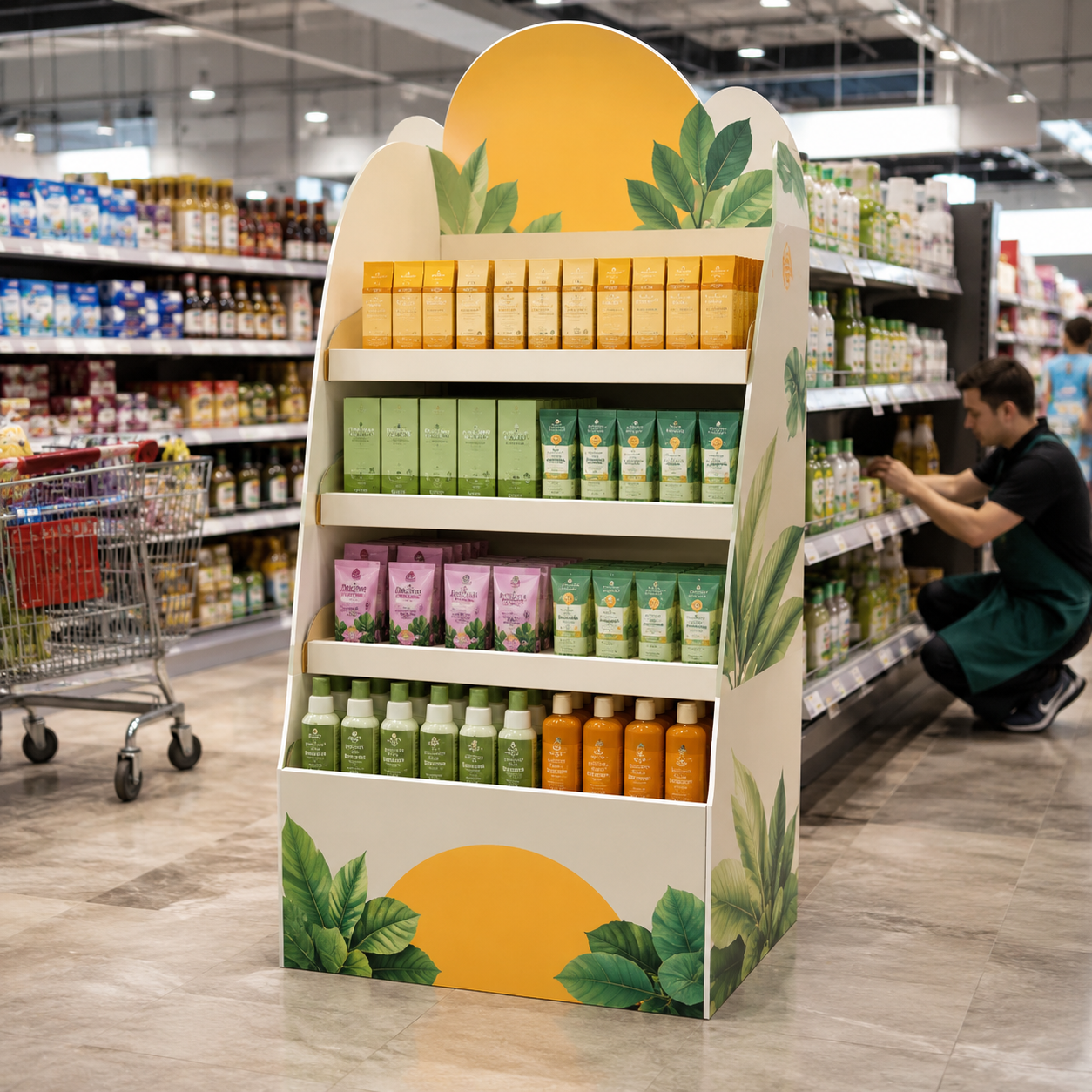
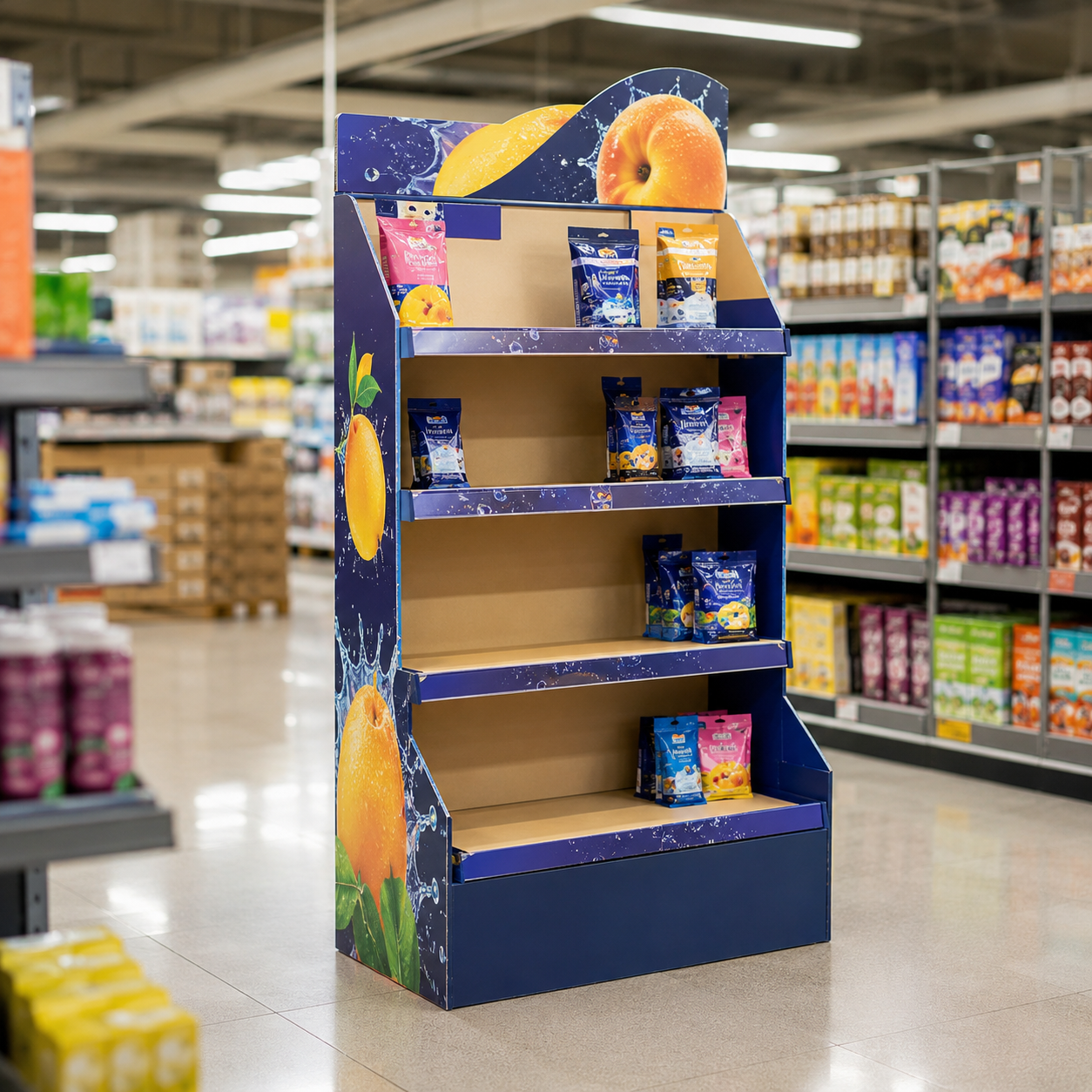
Floor displays are freestanding units placed directly on the sales floor, ideal for new arrivals, seasonal campaigns, grocery, cosmetics, beverages, and snacks. Their main advantage is balancing height, capacity, and branding space. They can include shelves, trays, headers, and printed side panels. For heavier products, choose a stronger corrugated board and carry out proper load testing.
Counter Displays
Counter displays are compact units designed for checkout counters, service desks, or narrow shelf spaces. They work well for lightweight, quick-pick items like lip balm, small skincare products, candy, gift cards, sample packs, or 1 oz travel bottles. They keep products within easy reach and are typically easy to ship, assemble, and replace. The trade-off is lower capacity.
Dump Bins
Dump bins are open-top displays for bulk, promotional, or clearance products. They allow large quantities to be displayed without detailed shelf arrangement, making them useful for seasonal goods, toys, snacks, accessories, and discounted items. The main challenge is keeping the presentation tidy. Loose products can quickly look messy, so consider adding front panels, inner dividers, or segmented trays.
Pallet Displays
Pallet displays combine storage, transportation, and retail presentation. Products are usually shipped and displayed on a full pallet, half pallet, or quarter pallet with printed cardboard skirts, trays, surrounds, or headers. This format is common in supermarkets, club stores, and big-box retail. Before production, brands should confirm floor space, retailer approval, pallet size, stacking stability, and transport protection.
Endcap Displays
Endcap displays sit at the end of aisles where shoppers move between sections, making them highly valuable for new products, promotions, and seasonal themes. Since shoppers may approach from different directions, the design needs to communicate its message quickly with clear product grouping, bold front graphics, and a visible header. Always check retailer requirements before finalizing the design.
Hanging Signs and Header Cards
Hanging signs, ceiling signs, and header cards usually don’t hold products, but they support the overall campaign. They help shoppers notice a promotion from a distance and make the display area easier to identify. Keep the design simple: large logos, short messages, and clear product images. Be sure to check store rules for installation and safety in advance.
Match the Display with Product and Store Conditions
Product size, weight, and shape should drive display selection. Heavy products like drinks, hardware, or large packs need stronger corrugated board, reinforced shelves, and proper load testing. Lightweight products such as cosmetics, small bottles, candy, or samples work well with counter displays, PDQ trays, or smaller shelf units.
Tall bottles may need dividers or front lips to prevent tipping. Flexible pouches may need angled trays or compartments to keep the front view neat. Small items may need slots, hooks, or trays so shoppers can see them clearly. An effective display should stay organized not just when fully stocked, but also after shoppers have taken some products.
Store layout is just as important. Entrances suit seasonal launches and larger promotional displays. Checkout areas work better for small impulse items. Aisle ends are strong locations for featured products, while wide cross aisles can accommodate floor stands, dump bins, and pallet displays. The display should never block carts, restocking work, or product access. Always check retailer guidelines before production.
Budget, Materials, and Graphics
Total cost depends on display size, structure, board grade, printing, order quantity, packing method, and assembly requirements. Simple counter displays are usually more cost-effective than large floor or pallet displays. Custom structures with multiple shelves, special shapes, or premium finishes will increase the budget.
For short-term promotions, lighter board materials may be sufficient. For longer campaigns or heavier products, stronger corrugated board, reinforced shelves, and protective finishes may be necessary. Flat-packed displays reduce shipping volume but require assembly. Pre-assembled displays save setup time but usually take up more shipping space.
Graphics should help shoppers quickly understand the brand, product, and promotion. A clear product image, recognizable brand color, short headline, and simple benefit message are often more effective than too much text. Artwork must follow production requirements, including dielines, image resolution, barcode placement, and retailer labeling rules.
Sustainability and Final Checks
Cardboard displays can support more sustainable retail campaigns when they use recyclable board, responsible sourcing, and a clear end-of-life plan. The structure should avoid unnecessary material waste while still providing enough strength for loading, transport, and in-store use.
Before production, brands should review the campaign goal, product size and weight, display type, store location, load capacity, artwork, assembly method, packing plan, durability needs, and sustainability requirements. The key question is simple: Can this display hold products safely, fit the assigned retail space, communicate the brand clearly, and remain practical for shipping and setup?
Conclusion
Choosing the right cardboard display type connects product features, campaign goals, store layout, budget, and logistics. A successful display should attract attention, hold products safely, support easy restocking, meet retailer requirements, and remain efficient to ship and assemble. When these details are planned early, a cardboard display becomes a flexible, cost-effective tool for boosting retail visibility and promotional performance.


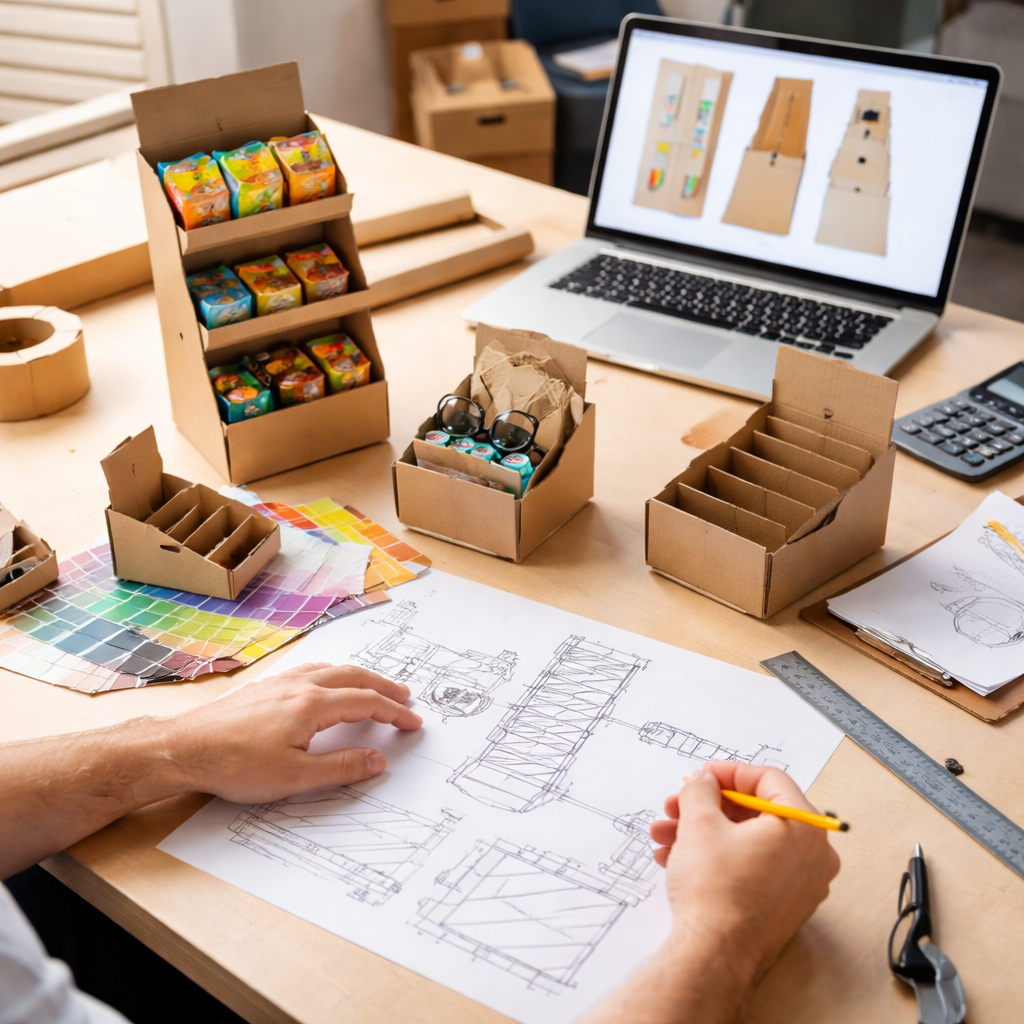
A selection of cardboard display types for flexible retail promotions.
Useful Links:
Floor, Counter, or Sidekick POP Displays: Which One Is Best for Your Product
How to Plan the Right Shelf Capacity for Custom Cardboard Displays
How Product Packaging Influences Custom Cardboard Display Design
Best Practices for Endcap Displays: Layout, Stocking, and Restocking
How to Design a Cardboard Display for Easy Restocking
Cardboard Display Prototype Approval: What Brands Should Check Before Mass Production
Latest Posts
All Posts