What Retail Buyers Care About Besides Display Appearance
Rendering visuals never guarantee buyer approval for retail displays. Buyers focus on structural stability, shipping, lead time, assembly and operational risks. Premium POP displays skillfully balance strong visual appeal with practical, reliable retail execution.
Back to blogs
Executive Summary
A retail display may look impressive in renderings, but their appearance alone rarely drives a purchasing decision. Buyers also consider cost-effectiveness, structural reliability, shipping performance, lead time, assembly ease, restocking convenience, and overall execution risk.
For brands and retailers, an excellent display is far more than something that looks attractive on the sales floor. It must also be well-suited for transportation, support products safely, meet store operations, and help a promotion run smoothly from setup to replenishment.
That is why experienced buyers usually evaluate display projects from both visual and operational perspectives. A display stand that looks impressive but causes problems during shipping, installation, or restocking can quickly become a costly mistake. In contrast, a display that strikes a balance between visual appeal, structure, cost, and execution is much easier to approve and roll out.
Appearance Matters, But It’s Only Part of the Decision
Visual design still matters. A retail display needs to catch attention, reflect the brand, and present products clearly in store. Strong graphics, a clean layout, and high product visibility all will boost shopper engagement and drive impulse purchases.
At the same time, most buyers know a display can look stunning in concept drawings yet perform poorly in real retail conditions. It may arrive damaged, tilt under loaded weight, require lengthy assembly, or become messy after just a few restocks.
That's why buyers ask a broader range of questions. They not only check whether the display looks attractive, but also assess whether it will perform reliably and stably over its entire retail lifecycle.
Structural reliability is one of the top priorities for buyers.
Behind every display project lies a fundamental practical question: Can the structure support the products safely and remain stable through the promotion period?
This is critical for floor displays, sidekicks, pallet displays and other fixtures placed in high-traffic retail areas. These units endure frequent shopper interaction, regular restocking, and continuous merchandise weight over time.
A weak structure may bend, deform or fail before a promotion ends, creating headaches for both retailers and brands. That is why buyers closely evaluate board grade, reinforcement design, shelf strength and weight distribution.
A visually appealing display without solid structural support is never a reliable option for physical retail stores.
Shipping Performance Affects the Real Cost of the Project
Retail buyers do not evaluate display costs by unit price alone. They also access shipping efficiency, packing methods, transport risks, and hidden expenses from in-delivery damage.
If bulky or fragile displays are damaged during shipping, the benefits from a low quote are greatly offset. Flat-pack displays are widely favored for saving shipping space and reducing freight costs, but only if their design ensures safe transport and easy on-site assembly.
In practice, buyers need to ensure the displays can smoothly complete production, packing, export, warehousing, and final store delivery while minimizing avoidable issues. In many cases, packing design is as important as the display itself.
Easy Assembly Makes Store Execution Much Easier
In-store execution is another key factor. Buyers consistently prefer displays that are easy to understand, quick to assemble, and user-friendly for store staff. A display may look exquisite during presentation, but difficult assembly will lead to inconsistent rollout results. Some displays are assembled incorrectly, others remain piled in backstock, and many fail to reach the sales floor on schedule. That's why tool-free assembly, clear fold lines, simple locking structures, and intuitive setup offer distinct advantages. Simple assembly not only reduces labor costs and minimizes errors but also ensures consistent brand consistency across all retail stores.
Restocking Logic Matters After Launch Day
A high-quality display must perform well beyond its launch date. It needs to stay fully functional, neat, and organized during the full promotional period. Buyers usually focus on whether staff can easily restock, keep displays tidy, and ensure product visibility.
Complex restocking processes can lead to cluttered displays and half-empty shelves, thereby diminishing promotional effectiveness. Deep shelves, narrow loading openings, and obstructed aisles create unnecessary burdens on daily operations.
Well-designed display units strike a balance between high-end presentation and convenient restocking. They help retail teams ensure that products remain customer-facing, neatly arranged, and fully stocked during every promotional campaign.
Lead Time and Supply Reliability Affect Buyer Confidence
Even the most excellent display will stall without reliable supplier scheduling. Buyers need to be confident that sampling, revisions, mass production, and shipment will all be completed on time. Retail promotions are closely tied to fixed launch dates, seasonal windows, and retailers’ internal review schedules. A missed delivery window can erase most project value, no matter how attractive the design. That’s why clear communication, realistic lead times, and stable production schedules are essential. In most cases, buyers prefer suppliers who offer transparent expectations and consistent delivery over those who make big promises but fail to deliver.
Cost Efficiency goes far beyond the Quote
Smart buyers focus beyond on initial price and evaluate the overall project value. A lower unit price doesn’t necessarily mean better results.
A slightly higher-priced display can be the more cost-effective choice if it reduces freight costs, improves durability, speeds up assembly, or lowers replacement rates. Conversely, budget designs often lead to extra costs from due to shipping damage, poor in-store performance, and extra labor costs. From the buyer’s perspective, the key metrics is not just manufacturing cost, but end-to-end performance from production to in-store deployment.
Smart purchasers don’t focus solely on the initial price; instead, they evaluate the overall value of the project. A lower unit price doesn’t necessarily mean better results.
If a slightly more expensive display rack reduces shipping costs, improves durability, speeds up assembly, or lowers replacement rates, it may actually be the more cost-effective choice. Conversely, low-cost designs often lead to additional expenses due to shipping damage, poor in-store performance, and extra labor costs. From the buyer’s perspective, key metrics extend beyond manufacturing costs to include performance throughout the entire process, from production to in-store deployment.
Compliance and Retail Readiness Also Matter
Most retail projects require displays to comply with strict distribution and in-store standards. Key details include barcode placement, outer carton labeling, palletization plans, carton specifications, and retailer-specific handling requirements.
A visually perfect display is not always operationally ready. Failure to address operational details often leads to delays in market launch. Buyers prioritize suppliers who not only excel in display design but also retail-focused production, packing, shipping and mass rollout protocols.
This is particularly critical for partnerships with retail chains, membership-based clubs, and large-scale promotional campaigns, where cross-location consistency is non-negotiable.
The Best Display Projects Balance Visual Impact With Practical Execution
Ultimately, buyers rarely choose display solutions based on aesthetics alone. They seek comprehensive solutions that combine a strong visual brand identity with reliable, practical functionality. A high-performance display solution not only captures customers’ attention and ensures product safety but also enables efficient transportation, quick assembly, and maintains full functionality across the full promotional cycle. When all these elements come together perfectly, it becomes easier to gain buyer approval. For suppliers, this means successful proposals rely not only on exquisite renderings but also on delivering end-to-end assurance in cost control, seamless execution, and stable in-store performance.
Conclusion
The appearance of a display is certainly important, but it is only part of the equation in purchasing decisions. Retail buyers place equal emphasis on structural durability, shipping efficiency, on-time delivery, easy assembly, convenient restocking, and the overall reliability of the project.
For brands investing in custom POP displays, the key to success lies in going beyond designs that focus only on visual impact. The most effective display solutions always integrate eye-catching visuals, sturdy structures, and seamless execution across the entire retail process.

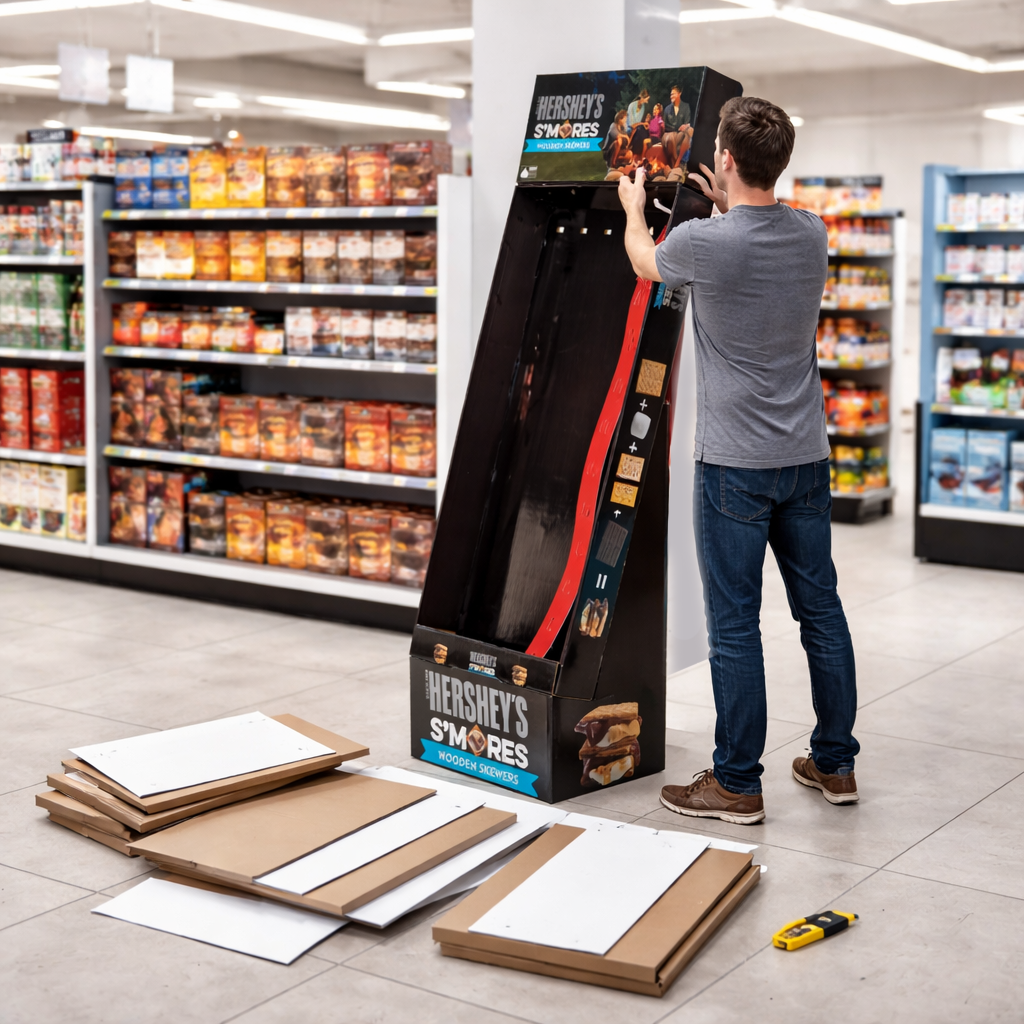
A custom corrugated POP floor display in a live retail environment, showing how strong structure, clean presentation, and easy restocking all matter beyond appearance alone.
Useful Links:
What Is a Cardboard Display Stand and Why Does It Work So Well in Retail
Structural Design of Corrugated POP Displays: Premium Appearance, Solid Strength
Cardboard POP Displays: A Practical Guide to Printing and Materials
Tool-Free Cardboard Display Stands: Streamlining Retail POP Display Installation
Understanding PDQ Displays: What They Mean and Why Retailers Use Them
Corrugated POP Displays: A Practical Pre-Shipment Inspection Checklist
Best Practices for Endcap Displays: Layout, Stocking, and Restocking
How to Choose the Right Custom Cardboard Display Stand for Your Brand
Latest Posts
All Posts